Wednesday, September 25, 2013

In Which a Bunny Meets Gentrification, And It is Her

Recently, I came across a promising posting for a cheaper-than-my-current-abode house online and followed up. I met the potential housemates at their comfortable house. We seemed to have coordinating worldviews, and made each other laugh, and they loved my dog. These are my deepest criteria for housemates, and after twenty or so housemates in eight years, the last two are the ones that truly matter to me.


After about a week, I emailed, thinking that perhaps they had lost my email address and had had no way to contact me. But no, after careful consideration, and with regret because they did so enjoy meeting me and my pet, they had decided that their house community needed to open itself up to more diversity and more native and locally-raised renters as a small, one-household sized stand against the rapid gentrification of Somerbridge, and as an open home to encourage more diversity in the local housing market.

I understand these things, I love their principles. I support taking what responsibility for justice and better-worldness we do have into our own hands with the choices we make. I know I am one of thousands of white female New England natives with various degrees from decent schools, who moved to these little, slightly more village like, towns ringing Boston, in search of work or something. I am the problem. I am the gentry.

There are a hundred things I want to say but don’t have the words for. And so I feel sputtery and all that comes out is “It’s not fair!” or “I am saddled with too much student loan debt and have too many crap jobs on my resume to be gentry!”

For these reasons, I do not feel that I am part of the gentrification of the greater Somerbridge area. I am pretty sure that gentrification is the word du jour for wealthy, so that we can talk about the American class/caste system more comfortably. It implies money, implies that the new residents have more disposable income than the old residents and sort of ease them all out through demanding new supplies. A local independent and cheap grocery store became another link in the Whole Foods chain recently. I find this ominous.

Aside from the black amusement at being considered gentry, I come up only with the question “where am I supposed to live, then?”

This is my perennial question. I struggle with it on nearly every level imaginable. I remain ambivalent about my biological-breeding clock, but the alarms of my geographic, place-rooted clock is loud and incessant. I am constantly—big and small picture—looking for my home. Friends and I have boiled the routes to roots down to three main paths: geography, people, or occupation. You’ll move for a set of people, or stay somewhere for one very special person. You’ll make a life somewhere because of the shape of a ridgeline, the bend of a river, the thrum of a city. You’ll set down roots because you’ve found something you love to do in a particular place. The hope is that, whichever one of the three guides you, the other pieces will fall—quickly—into place and you’ll find yourself with a full life, where you ought to be.

I’ve tried all three and remain distressingly uncommitted. I moved for the love of a very special guy, once. But the other pieces were too slow in coming and I was too young, I think, to be patient. So I left and it was sad, but I have no regrets about trying that reason for rooting in place. It’s always worth a shot and the heart is quite resilient.

I moved to the mountains of New Hampshire, which I love like something between a holy relic and my own bones. But, there, the jobs were scarce and frequently limited by the seasonality of the tourist industry. I just got tired of changing my jobs every four months, of constantly hoping and looking for just one job, even for a few months, of spending May and November with one eyeball glued to the weather and the other to my dwindling bank account. I have a dream of a cabin-house somewhere—the second homeowner housing market inflates land and house values in those mountains to the point that it would be very difficult for a seasonal worker with a pile of student loans to ever afford to set down roots in that place, in that form.

This was one of the reasons I left the mountains and came to the city. It hurt to leave those mountains I do not stop loving. But I thought I’d be better able to find a way to get paid to do work that I love, if I came to a place, like Boston-ish, with more opportunities.

In many ways, not in the ways I would have expected a year ago, this has gone well. I’m happier than when I tried to live in a place for the other reasons, that’s certain on an almost daily basis. I am still working multiple seasonal and part-time jobs, though. Which is almost perfectly okay. I am happy in all my work—gardening and school-librarianing—and able to leave work at work and live my life in my spare hours. Besides, I've been unable to find a full-time, year-round job, (and yes, I have looked.) However, despite my overall job satisfaction, I’m often a little closer to hand-to-mouth living that I’d like to be. I don’t want to work three jobs. I’d like be able to set more aside for rainy days or someday building a cabin or taking a long vacation to write or hike or just not spending almost half my income on rent and utilities or whatever. Moving out of my current apartment would help this, but I cannot seem to find anything cheaper that takes dogs and doesn't require new vaccinations to be habitable. And then, when I do, my own allegedly “gentrifying” identity comes back to bite me.

There’s no final thought here. I don’t have any answers. I do support that would-be house for their stance on the homogeny of the community here. But it’s tough to be caught in the teeth of your principles, when your being and belief get muddled into Maslow’s Hierarchy of Basic Needs. It’s like classism and the terrible job market and the broken educational system and the criminal state of college funding and the national lack of infrastructure and over-population are real.

What’ll we do about it? Because, with classism, my friends, we’re going to have to solve this on our own—the rich and powerful will not.

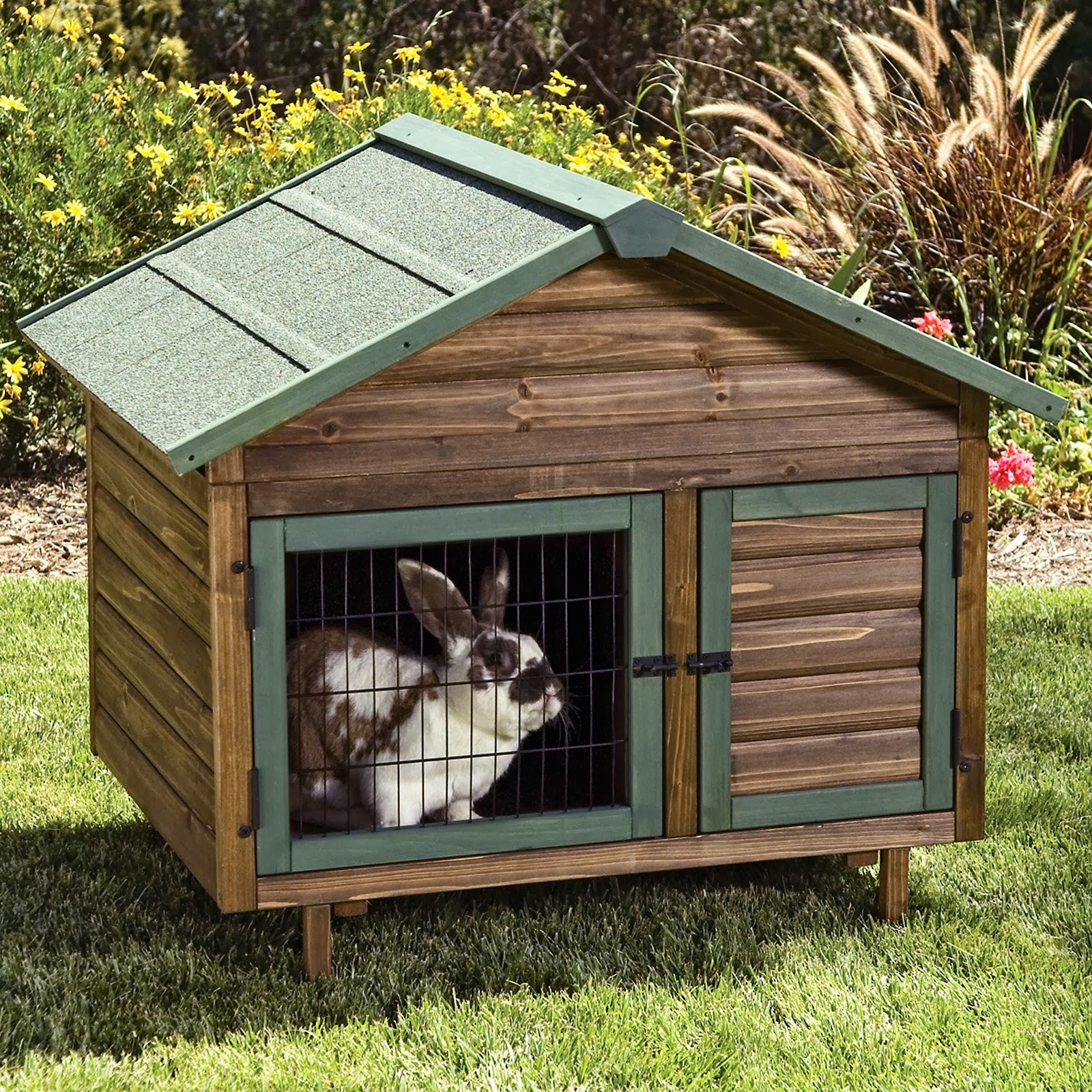
(photo from rabbitcagesources.com. I misread it at first as rabbitcaresoures.)


Saturday, September 21, 2013

Yes and No


Driving out of Somerbridge to go apple picking yesterday, the construction along Route 2 was staggering. In places, the road swells to more than four lanes, cutting a wider and wider swath through former forests and fields. A few houses are still standing beside the road, amid the piles of culverts and gravel and the ripped down trees. These houses look surprised, as if they were napping in their trees and are now unsure of how to face the strangeness of this new world at their doorsteps.  A little like a headlight stunned moose, really.

Earlier in the day, my new supervisor was training me on some aspect of my job. “That does work,” she said, “but let me show you how we’ve always done it.” I can’t remember what particular task we were working on, but the response has been the same for a few. I don’t have the cockiness to be sure that whatever new system I’ve happened upon is better than what has been done for the last twenty years, but I am suspicious of the assumption that the way it’s always been is the way it always should and will and must be.

In all contexts.

Perhaps this particular road expansion wouldn’t tug at my heart so much if it didn’t run by Walden Pond, if I didn’t imagine the ghost of Thoreau having to cross lanes of traffic if he wanted to go visit the ghosts of Emerson and Hawthorne across the way in Concord. Perhaps the tasks at the library would not compel me towards creative solutions if there were less learned and wooed reliance on plastic tape and book covers and computers and barcode scanners and all the other consumptive pieces that—to my eyes—are not truly enhancing anyone’s engagement with and learning from the materials at hand. The books are solid and beautiful, to me, and it hurts to see them bypassed by iPads and wikipedia. I am asked for laptop chargers more often than I am asked for books.

It every direction, it seems as if we’re simply entrenching ourselves deeper and deeper into a dying (and planet and people killing) system. And this is what bothers me. Rather than fix the national infrastructure problems at their core, we simply expand the roads. Rather than take responsibility for deeply damaging our planet with unnecessary crap and irresponsible habits, we churn out more and more and newer and newer devices that are filled with horribly harvested metals, coated in plastic, and demand higher and higher per capita energy usage. I own more electronic devices than my parents and grandparents—combined—did at my age. And I'm a relative Luddite among my peers.

In Tina Fey’s book, Bossypants, she talks about lessons learned from doing improv. That a good improv-er will respond to any situation with “yes, and…” rather than the obstreperous words “no, but…” “Yes, and…” allows the other players space to react, to maneuver, and for everyone to collaborate on something funny and free-formed and unexpected.

I’ve spent a long time in a lot of contexts saying “no” and “but” and it has never led to anywhere but frustration and me feeling alone against something too big for one person. I said “no” because I was scared, often, because I couldn’t know the outcome. I said “but” as a way to throw a wrench into the works, to give me time to think. However, I’m finding that it is usually more fun to say “yes,” more interesting to explore “and.” And, yes, this way of responding and improvising through life (what else are we all doing?) does seem to be more useful and less limiting in the “world salvation/personal happiness” movement.

My sister read recently that the average American commute today puts as much stress on the body as our ancestors experienced in a week. So, all those roads are not making our lives better, I suspect. I rode the train from Salem, MA back to the city last weekend. I got on at 6:30, just as the sun was in the most golden phase of setting. As the train went along, I watched that clarity of light hit on the ugly industrial backsides of the little cities. It was beautiful, and I had nothing to do for an hour, except soak all that beauty in. I’ve found the same while bike commuting—although that is fragmented by the stress and terrors of cars. To go a slower pace, or to give yourself that time…this feels like a solution, rather than a continuation of the problem. “Yes, I’ll take the train AND have some time to myself!” rather than “No, but I have to drive because otherwise I’ll be late for all I should be doing…” (Should is a filthy word, in my opinion.)

This is a different way from what we’ve been habituated to for a long, long time. That system is broken, and it is time to improve-ise something new. Let’s make it fun and various and beautiful with different little routes and paths this time around, instead of one all encompassing superhighway.


Wednesday, September 11, 2013

Let Us


Today’s date is rather inescapable, as are all dates in the calendar really. But, I am of the generation that came of age, was just on the cusp of reasoning and reckoning the world and our place in it, when mass chaos and terror and death exploded in a small corner of the world.

My experience of the day was uncommon in America, for which I am grateful. For me, always, when this day appears on the horizon of my September calendar, I am taken back to a golden day on a small lake in the Adirondack mountains, to the life in the woods some friends and I were attempting at the time. We could get NPR at the yurt village, but no television could be canoed across the late, and it would have sapped the power of our solar panels anyway. When the slogans and stickers and flag decals say “Never Forget, ” I always smile a little. What I knew that day was too rich and sweet to be torn down, and I find strength and sanity in remembering that time.

The writer Phil Condon, who I was fortunate to work with in graduate school, has a book of short stories titled “Nine Ten Again.” In the title story, one character says to another, “it’s never gonna be nine ten again.”

This is true. We’re never going back to what was before. What truly changed on that morning twelve years ago was that the myth of American invincibility came tumbling down. In some ways, we could have begun to understand the fear and violence and uncertainty that so much of the world lives with, daily. We could have responded to the shifting world with the same grace and humility and brave heading into the unknown as firefighters and rescue workers. I wish that we had.

I am saddened by the deaths of innocents that day, and in the months and years that followed as rescue workers became sick due to their overexposure to the toxins in our building supplies. But I am, in reality, no sadder over these American dead than I am over the soldiers who died in the ensuing wars, in no deeper mourning than I am over Syrian or Iraqi or Afghani or Newtown or Palestine or climate refugees or any of the other thousands of terrible and violent ways that innocent people die everyday on this planet.

My Facebook feed has been peppered with people expressing surprise that teenagers and college students have no solid memories of September 11, 2001. Aside from my worry at these kids coming into a world that is fraught and criss-crossed with fear and trammeled freedoms, I think that their general oblivion is a good sign. The world did not stop on that day because of the events in two cities and one field. I can attest to this—the leaves continued to change that fall, the eagles flew in and out of their nest on the lake, and the world churned beautifully on. Those small events put all the American-human terror and drama into perspective.

We cannot go backwards, we cannot rebuild the world to what it was, to the pseudo-blindness of before September 11, 2001. It is, however, always and forever, September 12. Every day is a new opportunity to make the world better, to respond and rebuild and evolve with grace and humility. Let us.

Monday, September 9, 2013

Some Thoughts On Being a Lady


I overheard a high-school aged girl referring to the troop of younger Girl Scouts she does female empowerment work with as “young women.” Somewhere, buried in the good respect and strength and wisdom of that statement, and in the vital work this student is doing, a contrary chord sounded in my ears. Despite environmental pollutants lowering the average age for monthly hemorrhaging out of our bits, and cultural pollutants insidiously sexualizing girls at younger and younger ages, I hold fast against referring to anyone in "the birth to about sixteen" age range as young women and men. Actually, it is because of these too-early arrivals of adulthood that I’m against pre-maturing the children with our language.

There is just too much pressure to be mature once those terms get bandied about. Moreover, I have been in too many situations where girls and boys of the same age are referred to as “boys” and “young women.” I suppose that this stems in part from the great work of the Feminist movement in getting women to love our bodies and ourselves, to respect ourselves, and to demand that respectful love, as well as equal power and opportunity, from the (predominantly male-powered) world. The dominant powers of the world would still, in too many cases, prefer to infantilize women, to make sure we don’t any of us worry our pretty little heads about anything. To that end, I highly support the use of the word “woman.”

But when we refer to the girls as women, and the boys as boys, we’re allowing one gender a longer childhood and demanding maturity of another. It perpetuates the “boys will be boys” and “girls just mature faster” ideas, which are incredibly limiting to everyone. And I just curdle when thinking how we rant and rave about “girl power” and how strong and well-rounded and accomplished and powerful women are (or can be), but we don’t pour quite the same effort into making strong and well-rounded and accomplished and powerful men out of little boys. For all that some cowboy/He-Man stereotype of masculinity is pushed on, oh, about everyone, there isn’t the same care and attention to the mature and empathetic development of men. Girls become Women (or, sexy dimwits with weird reserves of more calm, patience and wisdom than any human ever could possess, if you watch absorb most media). Boys become Overgrown Boys, which is almost a narrower road through the wide world as what we offer girls.

The warp-speed development of children into adults is as objectionable to me as the gender stratification, really. I was a weird kid. I’m forever grateful for that because I think that, having the parents I do, and playing dress-up with my sisters or our various forms of make-believe and exploration in our backyard long after it was cool to say that’s what I’d done with my weekend allowed me to grow up with my own brain in my head. I was shy and socially inept, but able to form opinions and original thoughts. It was also quite fun and funny, which is not to be overlooked. Being childish for a longer time, I think, has made me a better adult thus far. What we need is to find a way with our language and actions and expectations to allow girls to remain girls for as long as we let boys be boys, and to encourage boys to become as good men as we guide girls towards being women. 

I’m incredibly fortunate to be friends with some wonderful Feminist men, which I think must be a pretty hard path to navigate at times. Recently, while out hiking at night, one such dude-friend and I came across an exhausted and dehydrated and somewhat lost duo of men. It happens that I’m pretty thoroughly trained and certified and experienced in wilderness medical response. So I trotted over to the ailing man, and my friend stayed a few steps away, getting information from the alert man.

While I am not psychic, I’m pretty sure that the man laying in exhausted fetal position on the trail was not telling me everything that was wrong with him. He just admitted to being “a little tired” and, finally, that he hadn’t eaten or drank in a while and maybe a granola bar would help for that last quarter mile to the road. I, disgustingly, found myself sort of simpering and playing dumb-ish, because he was more receptive to that mode of assistance from me. My friend could hear all this and later said he thought about stepping in to say: “Listen, dude, she knows what she’s doing, so shut it and let her help you!”

His impulse was admirable. In order to make this a more perfect world, we need more strong men speaking up against gender issues and discrimination and violence. At the same time, though, I am glad that he stayed put and let me handle the situation as best I could, as best as Dude-man on the ground would let me. While I didn’t shed a single sniffle over Margaret Thatcher’s death, I did love the clip of her that I heard on NPR: “Being powerful is like being a lady; if you have to tell people that you are, then you aren’t.” If you are a female authority figure dealing with a Neanderthal, then your authority is somewhat corroded by even the best-hearted men on Earth explaining to the dolts that yes, you do have power, along with your boobs. 

We need strong empathetic leaders of all stripes and types and genders and “ists” and “isms” to demonstrate to kids (and adults and Neanderthals) the better ways to be in this world, and in the better world we’ll yet make. As Caitlin Moran wrote: “I’m just thumbs up for the seven billion.” Me too. And that includes encouraging childhood, as well as stomping down the dominant patriarchy. 

(Photo by Burdah, my wonderful big [huge!] sister.)

Tuesday, September 3, 2013

Problems with Prophets


Last week was the 50th Anniversary of the March on Washington and the radio waves were righteously filled with the deep sounds and dreams of Reverend Doctor Martin Luther King, Jr. Like a carillon of bells, pealing off, each with their own notes, scores of wise men and women spoke about those dreams, about that march, about the still sorry state of racism and classism and sexism in this country.

On Friday, Secretary of State John Kerry spoke about dead Syrian children, wrapped in sheets and lying without a scratch or spilt drop of blood. President Obama spoke later, laying how the tentative logistics of how other innocent long and short lives could and can be prevented from similar ends.

At various times, all three of these men have been seen as The One, the Answer, the Prophet who is come to save us all, to carry us all forward into the better worlds we variously imagine. And yet, we live still in an unjust world.

It is not exclusively the failure of our leaders that the world is such a mess. I believe that we ask too much of these humans. That is all, mortal flesh and blood and fallible, that any of us can be. To expect otherwise of anyone is foolish. To come to cynical distain—barely covering a broken heart—when these heroes prove less than perfect, this is cruel. There are no giants to stand on the shoulders of, just ordinary-sized men and women who rise to their occasions, who have combinations of drive and passion and leadership and the ability to say something close to the right words at a ripe time.

The true power in these situations—racism and classism and climate change and all the rest that knit into the human right to a clean and efficacious life—lies not with the leaders of various factions and movements. It lies with each of us, within each of us. In the purported democracy of the United States, the power is with the people, with our will and ability to vote and choose and recall and replace and direct those who represent us. When we remember, we’re actually holding all the cards, as well as dealing them. We must remember this, and act on this.

But, above and beyond politics, there is the place where movements and social change actually happen. It comes from people recognizing an injustice of some sort, some aspect of life and being in this world that isn’t right. And then, coming together over that common awareness. Leaders may arise from this, but the leader, the prophet, does not replace the true, beating heart of this revolutions. The prophets and what become the big names in newspapers and history books, these are the messengers and should neither be shot nor deified.

I think that when we put all our hope and trust and faith and belief into one of these people, we take some vital quantity of those virtues out of ourselves. We also, a little, relax and abdicate our own responsibilities to these causes and movements. Without people, these fights sputter out. I think about Election Night in 2008, when spontaneous parades broke out across half the country. I feel that we—I—gave up or in, feeling that my side had won and the hard work was over and everything would be better from then until forever. This turns out to be false. Had we maintained the same level of commitment and awareness for Obama’s presidency that we gave Obama’s candidacy, I wonder where we would be, what better world we could have been building by now. Perhaps the Copenhagen Climate Summit of 2009 would have still been a bust, perhaps Syrian elders would still have been gassed with their grandchildren in their homes, perhaps drones would still be flying around the world, perhaps, perhaps, perhaps, a hundred little things I wish this man I believed in could or would prevent could or would have been prevented. But, perhaps, a little more democratic participation by big-hearted and iron-willed could have changed the course of recent history.

The maxim that what you hate about another is what you hate about yourself has this glorious flip side: whatever you love in another is something you love in yourself. And so, for those of us prone to looking for prophets and poets, for believing in their capabilities beyond our own, I believe it is time to look deeper within and recognize the common strength. And then to speak and listen to those who feel the same. If we’re working for something approaching justice, these hierarchies of power become more and more foolish.

To be sure, there are those who can give better voice to a movement. Just as there are those who are better at the actual logistics of getting a million people to march somewhere, of feeding and housing folks along the way. There are people who are good at everything that we need to do to make a better world, and no one thing is inherently better than another. That truth, I believe, we must all hold most dearly. The prophets as much as, if not more than, any of the rest of us.

We each need to believe in ourselves and our own unique capabilities as strongly as we’ve ever believed and been buoyed by the words and actions of our various prophets. These great and fallible humans are examples of what could be, what will be. They are not the ends of these movements, only a means to demonstrate what is possible. Let’s stop dreaming about this better future for our world, and start making it real.

(Illustration from www.mlive.com)

Tuesday, August 27, 2013

Burning and Believing


Yosemite is burning.

Let those words sink into your skin for a moment. One of our most iconic public lands is being ravaged by fire. These are the mountains that called to John Muir, the mountains that he answered with the force of his writing, his communities, all in celebration and fierce love for these lands that spoke to him. This is a place that appears in countless family photo albums, in unknowable scores of memories of uncommon times in a common place. This is a place I have never seen but love, in abstract, for what it has meant to friends and strangers.

The reality is that our grotesque consumption and fear of change are leading us to destroy some of our best protected homelands, that we are proving unequal to the gift of these places. That sadness sticks.

I do not want to assign blame for climate change, for the burning forests and melting glaciers and eroding shorelines and shrinking alpine zones. Instead, I ask for responsibility.

And I am as responsible as the next person. While Yosemite has been burning this week, I have been dealing with the headache and expense of a blown out tire. If a thousand things were different in the structure of America, of the world, then it would not matter that I ran over a nail, punctured a tire, and now need four new rubber donuts for my OPEC-supporting, dinosaur-fossil guzzling, climate-changing, metal box, in order that I may drive each day to work, to earn the dollars that will feed me, house me, keep the lights and heat on via unsustainable fuel sources, clothe me, back-pay for my education, and pay for the repairs to said automobile so that I may continue the same old cycle.

If a thousand things were different…and I begin to imagine what that could look like. All I want, truly, is to live in a way that doesn’t hurt anyone so badly, including myself. That doesn’t set National Parks, or any other land, on fire. That doesn’t melt snowpacks and acidify the sea, that doesn’t have entire ecosystems migrating, that doesn’t entrench a national and global caste system deeper and deeper.

I have some ideas of what thousand things I would revise to re-make a better world. And everything I think of calls me to make my own world smaller and smaller—less distance between me and my food, between me and how I earn my living, between my electricity and heat source and my home. I do not think these things to become insular and isolationist, rather the opposite. Something good, some best bit of myself, seems to grow larger whenever my physical world becomes limited and that is the person I want to be in this or any world. We have allowed ourselves, encouraged, limitless growth in this land since before we were her people. So much so that we had to set aside pockets and parks, protecting some of the richest landscapes from our own insidious manifest. The same American attitude that led us West, always West, always looking for more and faster and easier...the child of this destiny is a world on fire, a nationally beloved landscape destroyed by the same nation. I suspect that more of us know than are saying so that the empire has no clothes, that the empire and the corporate-bought emperors are killing us and forcing us to kill our beloved places, our beautiful world.

It is hard to say those things when you worry that you are alone. You, we, are not. This is the one thing about a climate-change fueled forest fire rampaging through a National Park that I find good—this is a place that lives in the souls of millions of people. And, as such, I do not believe its damage and the cause of that damage can escape an increase in responsibility for its continued health.

I have seen too much good, too much that is beautiful and seemingly eternal to believe that our destiny must be one of fire and destruction. There are other ways of being. A thousand others, if we let ourselves think of them, if we speak of them. And, if we can think them, speak these words and ask these questions, then we can begin to live-find the ways and answers to these better lives.

Now. Even as we have more questions than answers, even now, this is the time to begin living out our thousand different, better ways of life. 

Wednesday, August 21, 2013

Of Mice and Mountains


Here is my confession: I still look for silver bullets. For all that I have written about the future being better and richer and more varied than anything that has come before, for all that I whisper these hopes to myself in the doubting nights, and preach them to friends on sunny days, I have dark times when I am looking for The Answer to present itself.

Of course this will never come. And, even if it did, I’d be fundamentally unlikely to trust it to be real and comprehensive.

It has been almost a month since I saw the mountain of coal sitting beside the ocean at the Brayton Point Power Station. I’ve been afraid to look up the rate of use per day and calculate how the mass I saw could have shrunk or re-grown in that time. The challenge of how to build a better world than the one that requires us demolish real mountains and make ourselves sick in order to live our daily energy-sucking lives…this has kept me awake some nights and made my days a little sadder now that I have some better grasp on the physical enormity of the problem. It’s terrifying and daunting and now I have tears in my eyes again about this.

Because I do not know what to do, and nothing that I do know how to do is anywhere close to what I would deem “enough.” I don’t know what enough looks like, and I know that even when an action isn’t enough, you have to do it anyway.

I ran away from all this darkness and doubt over the weekend. I went to the mountains, surrounded myself with the crisper air and the colors of sunlight on granite and schist and balsam fir and good people all the rest that I love up there. When I lived in the mountains, when I found my mountain people and we engaged in the common work peculiar to those beautiful hills, one of the best things I learned was how very capable we humans can truly be. An action needs to be done, and there being no one else there to do it, no one to pass the buck to, you quickly learn to jump in with little knowledge and cautious instinct. You have to trust yourself to be able, and to correct any mistakes you make. And to feel no shame in trying and failing, in learning.

When I look to my time in the mountains, there are things that I want to mine, to bring down the trails and into the world as so many treasures. There are the obvious things, that a hotel sleeping 100 people can run off of wind and solar and propane, that we simply do not need so much stuff, that physical labor is not something to avoid, that the best times of life happen when you least expect them, and so on. But, above all that, I would bring down that spirit of willing-to-risk-capability.

If we’re going to escape the nefarious grasp of the Normal—the American unfillable hunger for new and more and bigger and shinier and faster, the race to the top that tramples our hearts and happinesses—then we’re going to need to trust ourselves of being capable of anything and everything beyond that tired way of being.

Specifically, I went to the mountains this last weekend because Madison Springs Hut was celebrating it’s 125th Anniversary. Anyone who has spent an appreciable amount of time in those walls will have many and sweet memories. I love this. But there is a strange dark side up there too—in general the huts, in my experience were lousy with mice. I cannot begin to quantify how many traps I set, how many mouse carcasses I sent flying into the krummholtz. It was disgusting, it was horrid to think of those naked pink feet and tails scrambling over your foodstuffs, it was a stark lesson in mortality and human entitlement to empty their gray-brown bodies from the traps. But it was part and parcel of being there, just another piece of life that needed doing. So, we all did it, and now we know.

When I came home to Cambridge on Sunday night, exhausted body and soul from my time at Madison, the first thing my housemate said was “could you set the mousetraps?”

I do not believe in Destiny, but often, the answers we’re looking for are closer than they seem. I want to bring the willingness to try and fail and learn and become capable out of the mountains. I had not thought that it would be through the mice. But then, if there are no silver bullets, then the multitude of answers and actions we need can and will and do come from anywhere, from everywhere.

My words are braver and stronger than I am—no matter what I say or do, I’m still haunted by all the specters of a changing climate and unhappy people questing for a sick version of Normal that is killing our planet. That’s still a big pile of coal--and it's far from the only one. Neither my blogs nor my mousetraps are evenly matched opponents for such harsh reality. But, one has to start somewhere.

I’m off to check the traps, you come, too?