Wednesday, March 26, 2014

A Bibliography of Hope


1. “You already know enough. So do I. It is not knowledge we lack. What is missing is the courage to understand what we know and to draw conclusions.”—Sven Lindqvist

A friend invited me to speak to a class she is teaching at a local college. The course is Climate Change and Society and the students seem to be showing signs of despair after a semester of carbon counting and policy statistics. I believe that climate science, too often, cleaves a gulf between knowledge and action.
           
When we cavalierly drop the future of the world on the shoulders of a new generation, we forget to offer tools for building hope. We teach the science, the policy, the history of struggle, the challenges. We talk about problems, and then step aside, relieved to have passed the torch, blink back our own tears, and wait impatiently for their solutions to pour forth.

Collectively, we are taught and so teach that hope, that the heart, the soul, the emotional core of all we are and all we are capable of are not to be used as tools. We cut out our own hearts to try to save something we love, we cover up our childish old “Save the Rainforest” posters with climate spreadsheets and data sets and poll numbers, because Science and Reason, not hope or love, are the only tools we’re taught to trust, the only truths we’re taught to believe.

I am a hopeful realist. I have learned the science, the procedure of politics, markets, and culture. And, yet, I also know that there is too much active love on this world to give up hope and succumb to despair. I choose hope, and in doing so, I find hope renewed and rekindled with the beauty of the world.

2. “Despair is a black leather jacket in which everyone looks good, while hope is a frilly pink dress few dare to wear.”—Rebecca Solnit

I wore a fluorescent pink dress to the class. I own one, I had to. It looked like a costume, but the very incongruity of it on a particularly gray Boston morning made me smile. I know that there are other ways of being than to be chilly and coolly despairing. Hope is emotional and extremely vulnerable—your heart is on your sleeve and the world may break it—but it is also more joyful and more honest. This is a revolution of how we re-build the world. I want a kinder, more joyful, more honest world that is worthy of my hope and labors. To be hopeful is to remain a light, burning in the darkness, so that others can find you, can come in from the cold.

3. "We are all musicians in a great human orchestra, and it is now time to play the Save the World Symphony. You are not required to play a solo, but you are required to know what instrument you hold and play it as well as you can. You are required to find your place in the score. What we love we must protect. That’s what love means. From the right to know and the duty to inquire flows the obligation to act."—Sandra Steingraber

Your instrument, I believe, is what you love best. Your love of it, your fierce need to protect it, your joyful renewal in its presence—this is your instrument, the light you carry that will burn in the darkness, that will lead you to the Symphony and lead anyone who sees you out of their own darkness, to their instrument, and to their place in the Symphony as well.

And, you are never alone. In your solos, others are watching you, resting as you play, and waiting for their turn. If you are impatiently waiting your turn, if you feel your moment has come to burst above and be heard, then it is time, and we will all play along as best we can. Take rests, take solos, take comfort in being not alone in this beautiful thing. None of us know the music and there is no conductor, by the way—we are here for the joy of playing together and figuring it out and making something beautiful together.

Be kind to yourself, your instrument, and the Symphony, both the larger whole and the people in your section.

4. “Even though you blame the government, you really should also blame yourselves. You need to do something about your situation. Do whatever is within your power.”—Wangari Maathai

What is within your power? The choices you make in what you want and need out of life, what the priorities are for your time, where you find solace, reward, challenge, and joy, these—in large measure—supercede any true power that anyone else has to determine your situation. 

5. “I get up every morning determined to both change the world and have one hell of a good time. Sometimes this makes planning my day difficult.”—E.B. White

            What is the point of saving this world if we’re not able to enjoy it?
            Take time to live as if the fight were already won and the world was as you wish it to be.

6. “The farm is for Sophie, the fight is for Sophie, and this book is for Sophie.”—Bill McKibben

What, who, where, why are you fighting and working and hoping for?

To know this, I believe, is to know the wellspring of your hope, the shape of your instrument case, where your power lies, your pink dress waits, and what will renew you again and again.

We are fighting for love, and in the emotion's very unquantifiablity lies the courage to turn knowledge to understanding to action, to turn despair to hope.

Wednesday, March 19, 2014

Another Heart Land, Another Pipeline

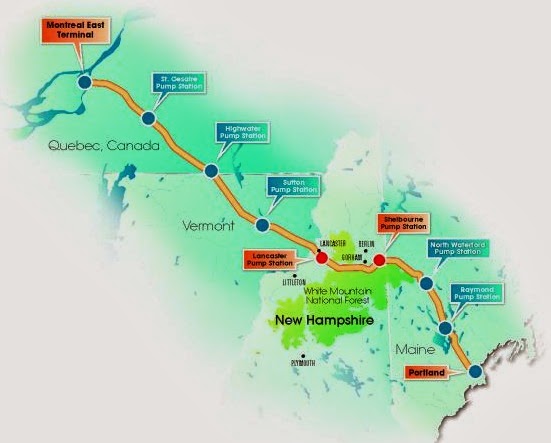
(Map from my nightmares, and www.concordmonitor.com)
I didn’t know.

Which is no excuse, really. But until this morning, I didn’t know that a tar sands pipeline is intended to wend from Montreal to Portland, Maine. More information is available here: www.tarsandsfreene.org. 

Part of the route comes across northern New Hampshire, through Lancaster and Randolph and Gorham, along the Androscoggin River, across the Appalachian Trail where the Presidential Range and the Carter-Moriah Range cede to the Mahoosucs.

This places are not, at present, my own backyard. All the same, I would not know myself without those hills and their forests. It's not as distant as a backyard, more like my backbone or heart.

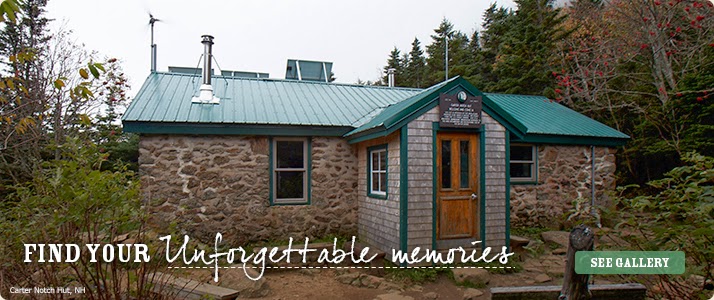
I spent a summer working at Carter Notch Hut. Two lakes, a stone cabin, and two bunkhouses fill the dip between the Wildcat Ridge and Carter Dome. Many of the places I have known and loved and lived in are beautiful, but in that so much of my time at Carter was solitary, I have a solidarity with that particular geography that is unmatched by anywhere else on earth.
Dear AMC--Thank you! I did find my unforgettable memories at this place.
Their beautiful, stubborn unforgettability is precisely the root of all of this. (photo from www.outdoors.org)
The water in the hut doesn’t come from the lakes. Instead, as I discovered when the faucets stopped one morning, there is a well drilled deep into the rock of an uphill spring. Yards and yards of black plastic hosing connects the spring to the hut. There was no need to filter the water because it came from the source of the spring, not the stream that flowed alongside the pipe.

But, when the water stopped running, I didn’t know that. I radioed the construction crew, who told me where to find the spring and to check the well. To save time, I ran up the stream and found the well was secure in the rock. My next task, then, was to follow the entire line down and check for leaks and disconnections. Eventually, and with Johnny Cash on repeat in my brain, I found the spot where the hose had been knocked down and disconnected by wind or a rotting branch or an animal or the Carter ghosts.

Regardless, the water was gushing out into a patch of sphagnum moss.

Although it took a full morning of scrambling through dense, pokey fir trees and uneven terrain to walk the line, tt took less than five minutes to reattach the pipe. And it was only water—and clean, spring water at that—pouring out of the leak.

Yet, to have worked even on such a small scale with the fragility of infrastructure, it leaves me cold to imagine what damages can and will be wrought by pipelines of crude oil criss-crossing each of our heartlands.

I’ve seen little cairns of stones built by hikers where the Rattle Rive flows under Route 2 and into the Androscoggin River Reservoir. I’ve looked down from the tops of mountains countless times on the river and the towns. For many summers, there was nothing like escaping the mountains for pizza and ice cream in those towns, and that post office has processed more of my mail than any address but my parents’ home, I think. I’ve sat through interminable hours of school board and town meetings in Gorham—in some ways, I think I know and love it more than places I have lived. I’ve left and come home to myself so many times at the sight of the Northern Presidentials along Route 2. To imagine that all of that, humans and mountains and forests and gardens and little kids playing in the river, continuing in the shadow of a pipeline…I don’t think I’ll sleep well tonight.

TransCanada says these pipelines are safe. I don’t trust them. But, even without the dire specter of oil leaks and spills from similar pipelines, I am skeptical of claims of safety. When even simple systems of pulling water downhill fail so easily, I have little faith in the infallibility of big systems. The more complex and the bigger, the more can go wrong.

I do not mean to be unhopeful and unhelpful. I am merely humbled to find how little I knew about someplace I love so dearly, to find that all my adoration for this thin strip of New Hampshire was not enough to protect it from threats.

But, now I know. And I’m telling you. And there are still things to be done. If you love these mountains, write letters to the New Hampshire Congressional delegation about how this pipeline is morally impossible. Write to the State Department, urge everyone with any sort of power to think about the ramifications, the costs and benefits of endangering this landscape.

Though, it is not just this landscape. I am particularly up in arms about this because I don’t want water flowing off mountains I love to mingle with oil spills in the boreal forest. But, it is everywhere. Our special places are as varied as our hearts, and no place should be threatened with this sort of activity.

Why do companies force and bully their way though, dragging out the bitumen, liquefying it for transport, fueling our everything, then? Simply this: they believe that if they build it, we will buy it. Let’s not. We truly do not need it to live well. If there is anything I know, it is this truth.

Aside from rock-based plumbing techniques, the most important thing I learned in the mountains was to make a good life with less. Stepping aside from the somnambulism of consumptive normal, I learned that I don’t need to own a whole lot of superfluous stuff—I learned to make do and fix and adapt and improvise and wear the same few clothes and get along with the people around me and to drive a car very little and to have more fun without than with. More and more, I find that to be the route I wish people to go. Get away from it all, whatever that means to you. Not only are the wild places beautiful, too beautiful to ever allow a pipeline to trespass in, but you’ll find yourself—hopefully—incapable of living in ways that foment a “need” for the pipeline. Don’t stay away forever—Thoreau only spent two years at his cabin—and bring all that you find out there back to the rest of us. Live out of the wilds as best you can in concert with what truth you find there.

Before you go, though, please do write to the State Department.


Wednesday, March 12, 2014

Illusions and Secret Pockets


The greatest illusion of a magician is that there is an illusion. The rabbit that lives in the hat, it must eat food a few times a day. So must the doves. The silk handkerchiefs, the golden rings, the top hats and magic wands—they are all real.

Someone sewed secret pockets inside the magic suit, and those pockets are as real as the truth.

I am fortunate to have lived in several such secret pockets. When I worked at a summer camp on the top of a little mountain, people would say how leaving the mountain was returning to the real world. As if all the moments that passed between the people in that place, between the air and the stars, were only an illusion. I know my heart to be knitted together with people of that pocket of the world in ways more real than words.

Similarly, when I worked in a different capacity, as part of a different community, in the same mountains, people coming through would ask when any of us mountain-folk were going to get real jobs. The tactile immediacy of that work, the physicality of it, the shared labors, the lessons I learned and the love I felt—I have spent long years in search of everything that offers anything close to the real beauty and camaraderie of that job. I have scars on my skin from this time—I touch them at times to remind myself of all that was good and real of that time and place.

Friends who have spent time in theaters and on farms, on sailing ships and pilgrimages, field jobs and little explorations of everywhere on earth, any and every pebble of time and space that is apart from average—they tell me of the reality of those secret pockets as well. We’ve lived as the handkerchief of the trick, flying through the air and in doing so, breathing thoughts of magic into the astonished audience who did not believe such things, such ways of being, were possible.

Escape from normal is possible, is highly encouraged. But you cannot know unless you are exposed to that possibility, to the magic of these real places and times. Try asking anyone you know where they have been happiest.

My friends from these pockets, we can be a little harsh. We speak in terms of who “gets it” and who does not. We’re getting kinder, mostly, in recognizing that not everyone we love wants or needs the same things, at the same times we realize it, that everyone is trekking along their own path and hopefully, going along as best they can, by the light of what they “get.”

Roughly, though, "getting it" equates to having zero tolerance for bullshit. Particularly the bullshit of what much of American culture tries to foist onto supposedly free and independent people.

I think this intolerance comes from having witnessed so much truth in the pockets. I know more about my heart, the world, and my place in it for having been a mountain hermit than I could learn any other way. I know that nothing I can purchase will ever come close to bringing me the joy of being above treeline with people I love, or watching starlight on the water. I’ve lived at the mountaintop, I know how much richer life is when its simpler, and it makes me crazy to be told by every subliminal and heavy-handed message outside the pocket-worlds that the truths I hold most dear are illusions.

Frankly, I think that many people in powerful places have a vested interest in keeping those of us pocket-dwellers quiet. It is easier, sometimes, to live in their illusions than to act on our faiths in the truth of our own souls.

We who get it, we who have lived out happy times with fewer clothes on our backs, more birdsongs than iPods, less and cleaner or absent electricity, fewer showers and billable hours, where our feet not our cars have circumscribed the distance of an hour, who have risen to the strange needs of circumstances and found ourselves gloriously capable, we need to rise up and live as we know how.

The world threatens to crumple like an old suit at times. What I worry and fear could fill a book that no one would want to read. With wars and climate change and over-consumption and health crises and poverty and all the rest, we are more or less complicit if we continue living as if our deepest truths of how to be were only illusions.

When I was nineteen and living in a yurt in the woods for college, I wrote in my journal that I didn’t want that time to be something weird that I did as a college student, that I worried I would look back on and laugh cruelly at my idealism and naïvete, to be nasty and say it had not been the real world. I have tried, since then, to live a life that that honest, romantic, and passionate younger self would be proud of. Or at least, would not run heartbroken away from. Of course, we all grow and learn, but there are ways to be true to the promises we make ourselves in the pockets, to the truths we knew in those times and places. 

Beyond quelling the sickly, skin-crawling feeling of being untrue to your own heart, to return to living more as you did in the pockets, is—I believe—the key towards changing the world. If we live as we know to be better, then it follows that the world will change. This is turning the suit inside out, exposing all the secret pockets, telling how all the tricks are done, dispensing with chicanery and illusion and exposing—instead—the actual magic of what we are capable of.

In his new book, "Radiance of Tomorrow," Ishmael Beah writes, “this wasn’t a place for illusions; the reality here was the genuine happiness that came from the natural magic of standing next to someone and being consumed with the fortitude in his or her humanity.”

This is the magic I believe in. I have zero tolerance for anything less real. 

(photo from Presto, the 2009 Pixar short. Watch it and see how what lurks in the pockets truly has more power than the magician.)


Wednesday, March 5, 2014

TransCanada's Myths and the Truth of Love


With great trepidation, I just had a look at TransCanada’s website regarding the Keystone XL Pipeline. As I don’t know a single soul who supports the thing, it seemed important to look, not just stay wrapped up in my cocoon of certainty about the foul nature of the proposal. Not that my mind or heart are open to change on this point, but I do want to know where these people on the other side of the public comment race to March 7th are coming from, to see what reasons people could possibly support inefficiently, dirtily ripping an ecosystem apart to send the—aptly named—crude oil thousands of miles through a thin pipe to be refined. After the refining, it will be burnt, consumed, combusted, and all its carbon will be released into the world, continuing to alter the climate, to change the weather patterns, ecosystems, and landscapes of our homes, increase storms, make enormous numbers of jobs uncertain, and all the rest that climate change means.

I want to know the reasons anyone could be for a future that looks like that.

TransCanada’s argument for the pipeline is, essentially, “Keystone XL is a choice between construction of a pipeline that supports the creation of 40,000 American jobs and reduces America’s dependence on Venezuelan and Middle Eastern crude oil versus continuing to import oil from countries that do not share American values.” Also, it purports to be the safest pipeline ever constructed, promises to pump billions into the U.S. economy, and in the “Myths and Facts” section skirts the overall issues of climate change and ecosystem impact. The website soothingly tells landowners that that TransCanada will be liable and responsible for all spills. As they should be, but wouldn't it be better to not have anything to spill in the first place?

I am American. I do not share the values of Keystone XL. I do not share the values of continuing to do business as usual while nothing—climatically, economically, politically, culturally—seems “as usual” of late. The uncertainty of the weather, of the skies we look at, the temperature and amount of sunlight on our skins, these do underlie more things about our lives than we might like to think, with all the insulated boxes we hop in and out of all day. And things are not usual in the weather department. At heart, we’ve built our lives, our culture, our ways and means of being in the world around certain natural truths—regular seasons, predictable tides. This is the underpinning of what “usual” has been, the foundation of all else.

I believe that all actions come out of love and fear, and generally, fear is just the result of love being threatened.

TransCanada’s rationale preys upon the deep fears that have grown, culturally, out of the uncertainties that the unusual and unpredictable climate create. Their theme that it is time to circle the wagons, make America’s energy needs interwoven only with like-minded countries, preys on this fear. Similarly, harping on the jobs that will be created, the billions that will flow through the pipeline and into the economy—things are hard for a lot of people right now, struggling to keep themselves dignified and fed, their children happy—plays into our deepest personal fears, doubts that have all too real reasons to suspect will bear bitter fruits. However, clothed in comfort and the language of patriotism and security, TransCanada is just fear-mongering, the tactics of a frightened bully, almost cornered, and seeking to sow discord.

What do you love?

When you watch the news, when you read about injustice or state-sponsored terrorism or unemployment numbers or particle counts of carbon in the atmosphere or any of the rest of the not very good news that swaddles us all day and night, are you afraid? Do you fear for the safety and security of what and who you love?

I do.

Yet, in my fear—which manifests as wanting to reach out and wrap my skinny little insufficient arms around so many people, so many places, so much of the tangible and intangible good that there is in the world—I am not inclined to take comfort from the lulling words of an international fossil fuel extraction company.

I do not believe for a second that TransCanada's intentions are any purer than their crude oil. They—and other fossil fuel companies—ravage the environment to suck out the crude oil for gasoline and petroleum products that our consumption of continues to alter the chemistry of the atmosphere, continues to throw our most basic senses of security into the increasing chaos of a planet in flux. And, through all this, the fossil fuel industry continues to make money, while selling us a poisonous snake-oil panacea for all our fears.

They profit from our fear, which in another extrapolation, means they are making money off our desire to protect what we love from nebulous threats.

The threats aren’t nebulous. One very real threat is a proposed pipeline, no wider than a hula-hoop, and today, standing in as the target for all my fear and fury about what I cannot control, what I cannot protect who and what I love from.

There are still more threats than Keystone in how we live, how we are afraid to change although we know that we are living unsustainably, that we are sickly addicted to a cultural structure that harms more than we knew we could love. And, we are all learning how to live better, how to change, how to make our own lives simpler, kinder, more sustainable, happier and more about what we love than what we fear. In time, we will always improve in these ways.

As one step of work towards that improvement, today, or tomorrow, or Friday, please for the love of all your holy things, submit a public comment to the State Department in opposition to Keystone. Answer TransCanada’s threatening myths with the clear truth of what you want this world to be for all that you love.

(photo of oil spill from nrdc.org)

Sunday, March 2, 2014

On Power

Today, thousands, I hope millions, of people are gathered in Washington, D.C. demonstrating that a passionate and vocal and powerful percentage of the American populace wants a future that does not include the Keystone XL pipeline. We—and I include myself in satellite solidarity—want better than the same dirty and unsustainable systems of the power industries, including government.

Part of me wishes that I were there. It’s the same part that sees pictures of Kiev and Crimea and wishes a bit to be present, involved, in the romance of a physically active moral resistance against a corrupt and dangerous regime. My imagination loves the idea of secret codes and darting messages through barricades and disguises and all the fun tidy bits I picked up from reading Number the Stars and watching Casablanca, and Inglorious Bastards. 

Mostly, though, I wish for the mass moral outrage that other places on the map seem to have thinner-skinned access to. I don't want National Guard troops swarming down on citizens demonstrating today in Washington for renewable and efficient energy sources. What I do want is people, average people, to care deeply and act accordingly about the threats to our lives that come with the increasingly erratic climate. And I want those in power, particularly, to need to pay as much attention as if their barricades were being stormed by revolting peasants, pitchforks and torches and battering rams and righteous indignation and all.

I want people to wake up and care—powerful officials and powerful citizens alike. Half the time we’re told that individual actions don’t really matter, that for all the canvas bags and bike shares and light bulbs, the real way to bring about substantive action on climate change is to work for policy changes, to work on a societal scale. And then we’re conversely told that people drive policy, so if we make personal changes, policy will also change. Or that the market will sort everything out, that we need to implement better market-based solutions and provide consumers with the ability to chose better products. We need to buy more to be sustainable? This never makes sense to me. I sat through a frustrating sustainability committee meeting recently where we were told, essentially,  that we wouldn’t really have any power to implement changes at the school until we had implemented some changes. In all contexts, this time-wasting game of chicken over who blinks first, who has the real power—the individual or society—is maddening.

I don’t want to be mad any more. It’s bad for my heart.

Trot yourself down to the local public library and find Wangari Maathai’s memoir, UnbowedMaathai started the Green Belt Movement in Kenya, encouraging rural women to plant local trees to restore their homeland ecosystems and to provide firewood and thereby stave off malnutrition. She did this with active resistance from a criminally repressive regime, and was awarded the Nobel Peace Prize in 2004. Maathai is amazing, and in her book, she owns her humanity, her struggles and failures and choices with a warmth that is often missing from the revolution. And, just as Maathai refuses to shy away from her own choices, she doesn’t let anyone else off the hook either. When her Green Belt ladies would blame the government for all their problems, Maathai responded, “Even though you blame the government, you really should also blame yourselves. You need to do something about your situation. Do whatever is within your power.”

Here, our government, our policies and culture are actively—and more insidiously, passively—leading us towards a lifestyle that is inherently incompatible with life on this planet. We complain about it, protest about it, feel hemmed in and stymied by “them” not doing enough to ameliorate the situation we each find so personally distasteful. We need to do something about our situation. We need to do a lot of things about our situation.

Considering Maathai’s advice, then, what is within our own power?

Simply, how we live our daily lives. Doing so, trying in everything we do and choose, to live as we wish the world were, rather than how it is, seems the best way to make it so. We have power to make the aspirational the actual.

Resources and opportunities are not equally distributed in this world. Neither are adaptability, imagination, intelligence, courage, empathy and moral fortitude. Obviously, in some practical ways the question of how you’d like to live and how you are able to live are different animals. But, in many ways, more ways, how we live is always within our own power.

Personally, I wish people to be thoughtful and kind, so I try to be. I wish people to speak their opinions proudly and listen to others respectfully, so I try to. I wish people to live lives that bring them joy, and so I try to hold the good and beautiful closer than the bleak and be happy. I wish people to be aware of the grim parts of reality, so I don’t shy away from the bleak entirely. I wish people to be flexible, so I try to keep my own semi-static ideals open to dynamic possibility. I wish biking and public transportation to thrive, so I try to limit my car use. I wish elected official to represent their constituents, so I remind them of this whenever the opportunity arises or inspiration strikes.

I certainly don’t succeed at all that I hope at all times, but these ideas of what could be guide what is. The closer I hew to what I wish things to be, the wider the gulf between myself and the allegedly powerful seems, the less power they have over me, over my life. I regain the power of how I live, what shape my life grows into.

I choose no Keystone XL pipeline, and increasing our distance from fossil fuels. I choose this with my letters to the government, with writing here and elsewhere, with remembering to look for my favorite shade of orange in the sunset, with everything that makes a life.

My thanks to those who are in Washington today, using your power on a grand scale. My thanks to those who are living private lives of joy today, using your power on a quiet scale.


Wednesday, February 26, 2014

Benefits of Failure

Don’t worry. I’m not about to start quoting Nietzsche about what doesn’t kill us makes us stronger, or pulling stoic inspiration out from the hard lives of the March girls, or Anne Frank’s diary regarding people being truly good at heart.

Those lessons and pick-me-ups are all readily available. You can get coffee mugs and tee shirts of most of them, which is a little gross. And some days, I go to those sources of recalibration and perspective and come away clean. Bolstered by those words, I dry my eyes, pull on my big girl panties and go fiercely, joyfully, out into the world believing in and doing the great things that I love.

But not always, and in the not always times, when you’re feeling like the lowest of the low, like you’re the biggest failure that ever was, chirpy little quotations and slightly banal scraps of wisdom don’t help. In fact, they’re just irritating. I personally want to garrote whoever said “don’t cry because it’s over; smile because it happened.”

Here is the only thing I’ve ever found that works to combat the hideous, unfair curveballs that life throws at you: people who have been there, or been worse than wherever you find yourself with your broken heart, dashed hopes, lost aspiration, whatever it is that has made you feel like the world doesn’t want you to contribute your best verse.

It’s not putting your grief and fear and sadness and self-doubt in perspective that is important here. I’ve found that, on the whole, thinking about the often-tragic state of various parts of the world and society doesn’t make me feel better when I’m low. Because then I just add spoiled and self-indulgent to my list of flaws and, really, that doesn’t improve the situation. If you’ve just lost your job, say, thinking about Romanian orphanages or California crop failures is not a good pick-me up strategy. (Actually, Anne Frank’s diary does have some good wisdom on this point: she’s pissed about being in hiding, spending her adolescence locked in an annex with her family. Her mother tells her to think of people who have it worse. Anne, essentially, responds “yeah, but that doesn’t mean I have things so hot right now.” I love that.)

Because, when you’re in the shit—whatever the reason that got you there and whatever hue your hard times are—you’re just in the shit. I can’t recommend a long wallow, but I can recommend finding good, honest people who have been in similar straits. The people who know where you are, what devastation and self-recrimination and uncertainties are raking across your heart and soul. The good ones, the best ones, the kindest ones, they do not ask questions. They offer empathy, rather than advice. They ask no questions, just open their hearts and let you crawl inside. In doing so, you know you are not alone and you remember that, although the slings and arrows can find you, so can the sweetness and the love. That sometimes, life is just hard. And, while your grief and fear and messy response to that truth is utterly personal, often the cause is not. 

The scariest truth about the universe rejecting your best effort and intent is feeling passed by, as if you are somehow not “enough.” And, when you’ve given yourself to something, coming up short eviscerates your sense of self.

Aside from heartbreak, which is as unique as it is universal in its horrific catalyst for feelings of failure and doubt, the biggest sense of failure I see my dear ones grapple with is finding a means of feeding themselves and using their brains and hearts. Our job market and economy and education system are failing us all and, yet, we blame ourselves.

Far too many brilliant people I know and love are finding themselves flailing in the current job market on all levels and in too many fields. I know this kind of failure-feeling too well. I spent last winter applying to scores of jobs in the environmental-social justice field that I went to college and graduate school for. And I waitressed, part-time, all winter. It was hard and awful to feel so ignored and as if the world didn’t want what I most dearly long to give. All of the passion I have for trying to make little corners of the world better was always the wrong color for what the job market wanted. It is a hard and bitter pill to swallow again and again, to receive a rejection and then brightly return to the search as if your heart were still whole and hopeful. Fielding calls from my student loan officers at this time was particularly raw—a reminder that I was failing to uphold my end of an educational bargain from a different world.

I cried a lot. And, then, with the help of my incredible support network of dear people, I began to see that I wasn’t the failure. It is a violently evil system, the job market and economy. I am particularly disgusted by the ways in which the education system has an utterly unholy alliance with the economic system. I wouldn’t say that I’m exactly winning at the employment sector of my life, but I have learned to temper my expectations, and to as much as I can, step away from the evil parts of the system. The most truly evil piece is the idea culturally implanted in our brains that our self-worth is the same as our salary. As one of my brilliant sisters reminded me last winter: “They will never pay you what you are worth.” Where I am now, I don’t think I’d much like my self-worth to be counted up at all in the same nasty system that makes so many of us doubt our worth and efforts. It is not kind. To be kind to ourselves, I think we must accept that the system is a bully and distance our hearts from it.

We are all going to fail. We'll lose jobs, misplace love, try our best and be a little short. It’s part of life. When I learned to ski, the mantra was “if you’re not falling, you’re not learning.” I had numerous snow-scoured welts and deep plum bruises. But I learned. And, then, whenever I’ve got the chance since, I’ve tried to help others ski. I encourage trying so hard you must fall. And then I pick them up.

That is the benefit of failure. After we ourselves have fallen and eventually come back, we have the choice, the power, to open our hearts to the newly fallen. The benefit of failure is that you can become kinder. Reach out, say you’ve been there too, and let the heartbroken cry about the unfair world. What we fear most is to be alone and unloved, this is the deep doubt that unfairness sows. Be kind and those fears begin to evaporate as the ghostly untruths they are.

And, that undercurrent of kindness and empathy at failures, this is what will erode the nasty systems and narrow definitions of success that cause us such doubt. This is how we win. 

(Image is from the Zen Ox-herding pictures. The little kid is asking where wisdom might be found and the old man is saying "I don't know for you, but I found it over there...".)


Sunday, February 23, 2014

Conformity


“And we thought, why out of all the options out there, would anyone chose conformity?” So asked one of my wonderful friends, reporting a dinner conversation with her equally amazing husband.

It’s a great question. The answer, I think, is that many people don’t know what else is out there. The power of “should” is enormous in our cultural bathwater. We should be early to bed, early to rise, should study hard and get good grades, should go to the best schools we can, should get reliable jobs with increasing levels of responsibility and salary, in the fields we studied in school, should buy a house not too far from our jobs, should get married, should have children, should own a certain amount of stuff and live within the bounds of a certain way, and should and supposed to from cradle to grave.

I take no issue with any of those actions as long as they are the heartfelt choice and decision of any person or people. The friends who had this dinner conversation about conformity, for example, got married because it was the most interesting way they could imagine their lives to be—hitched with some idea of dynamic permanence to the wonderful creative uncertainty of their now spouse. It was their very intentional and considered choice, not a rote filling in of anyone’s expectation.

But, I work daily with high school students who seem disturbingly brainwashed to believe that conforming and giving the “right” answer is the only way that life can ever be. And, outside of work, I live in this world where the shoulds and supposed-tos, seem to cause a great deal of emotional turmoil and foment a great deal of over-consumption that is causing the landscapes of our worlds equal upheaval.

I live sort tucked by ethics and education and choice and belief into a certain niche. Marketing, would probably label me “alternative” because I don’t buy most of the bullshit that I believe mainstream culture is selling. My dream house is a small cabin, my ideal paid work at the moment would to be a part-time small town librarian and part-time farmer, the beauty industry has yet to make me hate and “need to fix” my face or body, I’d rather live where I don’t need one than have a fancy car, and so on.

And yet, even within “alternative” subcultures, there is a certain amount of conformity. Try telling the hippies you shave your legs and adore bacon. Or the hipster intellectuals that you love musicals, non-ironically. Or telling pro-choice people that you might choose to have a baby. Or telling an intentionally open-minded globally, racially, and culturally diverse community that you’d like to pray a specifically Christian prayer. Knowing folks who have done most of those things, it seems about as strained to break from community expectations as to cross to another community.

We need to broaden all understandings of normal in all corners. It’ll makes things less predictable, but also much more exciting. There are such possibilities in living more fully as the complex paradoxes we all are.

I’d like to get further and further from all our even vague definitions and sub-cultural norms. Or not further away—that implies distance when what we need is depth and variety within the words, the ways. I don’t want to do away with definitions, I want to multiply them, to have more people belonging to more communities, finding more and more common ground.

Plainly, it is just more fun to be surprising, to upend the expectations that are unconsciously put on all of us, that we put upon ourselves. I heard last week that Pandora is going to start selling political ad space, and that the ads will be based on the music you listen to. I find this disturbing, but also a delightful opportunity to broaden my musical selections so I can't be defined by advertisers. Or to just quit Pandora entirely and pick up the various instruments that gather dust around my house. Or to continue doing my own research about candidates for various offices.

I worry about how ubiquitous conformity is, how the slightly sickening lull of something agreed upon as normal is everywhere. Mostly, it seems like non-conformity is the choice, rather than conformity. There are some things I choose to do out of almost pure contrariness, just because I don’t like being told what to do. And then there are things that I do because they make me purely happy and choosing do anything else is just foolish. The difference isn’t really that important or decisive, as actively not conforming just for the hell of it makes me pretty happy anyway.

Subverting normal and just going towards what you choose is certainly not as secure as conforming. But, when I think of the allegedly secure systems of support that conformity requires—expensive education with loans “needed” to enter a craptastic job market, expectations that you can’t do what you love because you need to earn a certain amount of money, heartbreakingly false and limited ideas of what love is, destruction of ecosystems to fuel our lives, wars for oil, much of our “necessary” stuff made in unkind sweatshops—none of it seems either good or solid.

And so, in the acts of not conforming to that way to life, in making our own choices and living out what feels clean and true—regardless of who’s norms we’ve been conforming to—has a lot of freedom to offer. I’ll take creative possibility over destructive conformity any day, every day.

The trick, I think, is how to be a functioning society of shiny happy non-conformists following our hearts and happinesses all over the place in a potential fog of selfishness. It’s a possibility that we might all implode in pursuit of our individual ways. One of the biggest ideas of American-brand conformity that gets to me is that lie of being able to do anything and everything alone, that the individual is utterly free and independent. The truth, as I know it, is that we need each other. However, we can’t make anyone conform to our own choices and ideas of happiness. That’s the sort of selfishness that gets people in to lonesome trouble, I think. Our choices and actions have reactions and repercussions in those around us. To know that as deeply as we know our own choices, is the best way I can think to subvert the expectation, not conform to the idea that self-aware is the same as selfish.

At least, that’s what I’m trying to do. Feel free to find your own way. Or not. As you wish, please.