Showing posts with label revolution. Show all posts

Monday, August 28, 2017

Twelve Years


Twelve years ago, I went to Biloxi, because I was at loose ends, because my parents bought my plane ticket, because them sending me was something they could do to help in Katrina’s aftermath. I worked with Hands On Disaster Relief (now All Hands Volunteers), the sort of outfit in its early years that asked only “do you have your shots, and do you want someone to meet you at the airport or bus station?”

My friend Serena had found this group, she went down a week before I did and met me at the airport. Other friends—Nina, Josh, Lydia, Kate, Carrie, Beth, Laura, Will, Vee—came too, or we met and made friends with each other as the raggedy bunch of recent college grads we were. I don’t remember it all, perfectly.

What I do remember is the knot of horror and rage that left me feeling like I was going to cry or vomit most of the time. I’m a white girl from New Hampshire with an expensive education. I spent most of my time in the mountains. I was not prepared for all of the destruction, for shaking hands with the people who had been left behind or stayed behind or just got back to Biloxi after the storm. I was not prepared for reality.

I came out of all of that, after a few months, with a puppy. Carrie had fallen in love with him at the animal shelter, but whatever home she’d thought to give him to had fallen through. And then when it was time for me to go, the puppy was on the edge of just being a spoiled feral pet of Hurricane Camp, so I adopted him. It wasn’t anything official—I just happened to be the one to take him to the vet, and I happened to write my name down as “owner.” I named him Noah, for the flood. They told me naming him Noaa would have been too much, even for me.

I kept that little guy, and I loved him. And for almost twelve years, he was my constant companion. He went with me across the country six times, saw me through two shattering heartbreaks and some minor heartaches, came with me to grad school, hiked where I hiked, swam where I swam, was where I was, for all that time. When my father died, I regularly cried into Noah’s fur like the world had ended. It has been a roller coaster of a decade, and Noah was there for all of it. We were the most secure daily fixtures in each other’s lives through all the changes I dragged us through, the adventures I sought, the troubles that hit. Until my poor sweet Pet came down with dementia, became uncomfortable, inconsolable, in his own skin and I had to let him go—two months ago now—snuggled in my and my sister’s arms, loved until the last moment he knew and beyond.

As the rain falls and the water rises in Texas, I feel as if no time has passed. Because the news is the same, the pictures are the same, the devastation is the same, the goodwill of neighbors, the kindness of strangers, the imbecility of the leaders, the ovine shock of the rest of the country…all of this is the same. My dog has lived a full life and died, and we—the people—have still not addressed the root causes of why these storms are so devastating.

The climate is changing, and we are changing it. The people we elect to leadership positions are not leading. These storms are not the wrath of God, are not natural—unless you might, as I could be convinced, think that these storms are the divine wrath of the forces of nature rising up against the species that has wrecked and ravaged our way through the world since we first discovered fire.

Storms are more frequent and with heavier loads of water because the planet is warming. The planet is warming because the emissions from making cars go, planes fly, smartphones charge and plastics ubiquitous and life too convenient are thickening the atmosphere and trapping air closer to the planet. We are thickening the air, insulating our planet from the necessary cool of the rest of the universe. And so, in our little chemical hothouse, the warmth begets moisture, the moisture begets storms with greater wallop than ever.

What is stopping us from stopping these things? In part, we are simply a lazy, selfish and unimaginative people. We think such things as Katrina, as Sandy, as Harvey will never happen to us, personally. It’s easier to think that. It’s easier to turn off the imagination, the voice that says “what if…” Horror of our own is incomprehensible, surreal. But, as my friend Mary, reporting from Charlottesville last week said “the thing to say is ‘it’s so surreal’ but that is an utter disservice to the reality that this all is.”

I don’t care if mass flooding and destruction is never going to happen to me. I’d rather it doesn’t, but it’s going to happen and keep happening to others, and there is nothing special about me that is going to make a storm pass me by. Anyone’s reality could easily be my own, if the tides turn, if the weather shifts. When.

If you did know that a storm was about to destroy your life, but could be soothed by taking a bus or putting up solar panels or air-drying your clothes, would you make those changes? Can you go without, can you live smaller, simpler? Could you use electronics less, more wisely? Are you willing to donate not your blood or money to relief efforts, but to make structural changes in your life that will cut the emissions that are increasing the severity of storms?

And then there are our politicians and industrialists. The policy makers seem hamstrung by industries that make money while Rome burns and floods, because they are. Our president cares more for his t.v. ratings than for staffing the agencies that oversee disaster response, never mind his abysmal decisions on loosening regulations on industries that will further increase the cloud envelope around the planet. But, much as I despise Trump, he is not solely responsible for this storm, personally. The fault is with all people who have power and refuse to act responsibly with it. All people. Anyone who makes a choice has power, that is the sort of power that needs to shift, that is the power we all have.

Twelve years. That is the difference between a first grader and a high school senior. That is a lifetime. I simply cannot accept that so little has happened on a large scale when so much happened in the small space between myself and the little dog who came out of the flood with me.

Lastly, a nice man I met in Biloxi, standing outside what had been his house, said that in disasters, people should donate socks and underwear. He could cope with a lot of the troubles, but being able to wear clean underpants just makes a person feel more human. This is the scale that horror happens at. Send underwear. Thank you.

Saturday, August 12, 2017

Why the Wilds


Right now, I’m sitting in a big house on the coast of Maine. The breeze is coming off the water, and when the tide goes out again, I’m planning to kayak out to say hello to the seals on the nearby rocks.

And, in the meantime, I’m checking the news and seeing nothing good. Charlottesville is happening—I’ve just read about a car plowing into the crowd of KKK, Neo-Nazis, and their counter demonstrators, showing up for equality. One person has died, and more are injured, and it’s only mid afternoon.

Yesterday, the news was full of the President talking about using fire and fury and something even worse against North Korea.

And that this was, again, the hottest year on record. And refugees are still dying to leave their homes, and unwelcome on more and more shores.

The news, my dear, is as bad as I’ve ever known, and this is not the first time I’ve thought so. The weather is hot, the planet is crowded, resources are scarce, and we are all so frightfully on edge that damages that cannot be undone will be, are being, done.

What place, then, do words about seals and terns, stars and pine martens have? The more I know, the more frequently it feels like treason to still love wilderness, to still use the privileges of my skin and geography and lineage and education and bank accounts to go places, to watch for tides and scramble up mountains. Sometimes I worry that caring about the natural world and ecosystems and wilderness is very much rearranging deck chairs on the Titanic—if humanity does itself in with race wars or nuclear explosions or anthropogenic catastrophe, how much will the golden slant of sunset or the relationship between blackflies and blueberries or the calming transcendence of being a wild place matter?

I sure as shit don’t think we need a Wilderness Matters movement. Unless the bears and toads and birches are going to start rioting against the rank injustice of how they’ve been treated by humans, that’s just comparing sunlight and humans—as false a dichotomy as pro-life and pro-choice. Personally, I’m both. I’m for all of it. Sunlight and humans, life and choice, nature and culture, town and country, women and men, white and black and all the shades and variances between all of the supposed end points of spectrums.

A renewed appreciation and commitment to all the things is what I get from being out in the world. The scope and scale of the world will blow your mind—we operate so far from mere binaries and three-dimensionality. Recently an old friend and I hiked in the White Mountains. We passed through three major ecosystems and innumerable microhabitats. We’ve hiked the same trail together several times in the fourteen years of our friendship, and each have hiked it other times, with other friends. Our conversation was thick with their names, with stories and catching up have to tell, with the revelations and inanities that accompany any good hike. In one breath, we talked about the alpine plant community and the ways in which media is improving at portrayals of brown women. We hiked a busy trail on a beautiful summer Saturday and the trail was thick with other folks, all out for something like the same reasons we were, all passing over the same roots and stones with different stories and words and histories. All in the same place, yet each hike was distinct to the hiker.

And that’s just the human aspect. The mountain avens—subalpine flowers with a bright yellow buttercupish flower and leaves like spiky strawberry leaves—experienced the same day however flowers do. Maybe that’s just taking in sunlight and nutrients to pump out buds and blooms and fruit and propagate their species as best they can. Maybe plants do more than that, feel more, but even if not, that’s a remarkable amount of life happening in a little patch of the world.

The water rushing by the trail—frigid at the waterfall we stopped to swim in—all of that gushing and glugging along has little bits of life in it as well. And the rocks that the water runs over, that we clamber over—I draw some line at geologic sentience, but still, glaciers passed over those same stones before we ever did and snow sits on top of it every winter, waiting to hatch the mountains anew each spring. There are layers there.

I know, we all know, that human activities are changing the world, the ph of snow and ocean, the climate that ecosystems evolve with, the creation of trails, the pollution of water and air. And yet, I get great, humbling pleasure out of the reality that the mountains and the sea do not care about humanity. If I have a god, it is the ways in which I don’t matter to the rocks and the sea. The world means the world to me, and it doesn’t know or care what I do.

In the Scientific and Industrial Evolutions, there was an idea that God was nothing but a watchmaker, and that if the world could be picked apart and explored and investigated from the largest cogs to the smallest bolt and screw, the world could be known and Man (never Woman—we were busy with herb gardens and healing and raising babies) would be equal to the Divine.

This, I think, is horseshit. Even if I can think of all the cogs and wheels and layers and threads and fantastical tapestry of a single moment of my hike on that busy trail, if I can contemplate the lives of the seals and seabirds and tidal creatures and plants that I have been kayaking out to each morning while I housesit, my head and heart start to explode. If I add in the lives of all the people on the trails, the summer people owners of the moored boats and summer cottages, the people who live here always and maintain the docks and lobster buoys that I see as I sit as the lone human among twenty seals—well. The world is too big and beautiful to be understood taken apart like a simple watch.

I know enough to know I do not know a damn thing. That variety of ignorance brings me the greatest joy, allows me the space to fall in love with the world and all that it holds. Maybe there is something primal out there that rips a few layers of protection off my eyes, off my heart, but I come back from wilder places more able to see the complexities of life where humans live. And that helps, enormously, when reading the news and trying to figure out how to be in a fraught world.

Pine martens will not stop racism. Knowing the constellations will not erase the American caste system. Watching a seal dive will not calm the political discourse. The smell of salt water, of balsam fir will not stop nuclear proliferation.

What the wilds may do is open your eyes to the world so that you may better participate in the wider world. 

Tuesday, March 14, 2017

Rose Heat


“as the brick of the afternoon stores the rose heat of the journey” is the opening line of Gareth Evan’s poem that opens John Berger’s vital book Hold Everything Dear.

My head changed the words to rose heat for the journey, a small change, really, just one letter more and a bit of reshuffling, and there we are. I think of this when I see leaves soaking in sunlight, when I see logging trucks on my New England highways, when I put wood into fires, when I absorb and absorb and absorb the particular golden light of sunset, when I try to hold onto fierce peace of wild things, when I reach down within the best of myself to do good work in the world, to stretch my hands out like tree branches and become awake and aware and alive in the world.

The certain knowledge that people who live in the same neighborhoods as me, who shop at the same grocery stores, walk the same streets and pause to look up at the same shrieking seagulls and sunlight on the water…that these nearby strangers are having their doors knocked on by the government, that the phrase “show me your papers” isn’t reserved for Nazis in movies anymore, all of this is calling up on all the wells of rose heat I’ve ever stored for any journey. It’s stored up and spilling over—and some days starting to leach away—because I do not know the right outlet for all the love and concern I feel for all this beautiful world.

A student told me the other day that he had been seeing a lot of bald eagles around the college. Maybe, he said, it’s just the same one over and over again, but it’s still pretty amazing to see. I agreed, took heart at the wide-eyed wonder of someone even just a decade younger than me, and thought about how close bald eagles and other birds came to extinction before DDT was banned, before the EPA was formed, and how much love of the world is in real danger. When I lived in Montana and was hiking with a friend, a bald eagle swooped low over our heads and my friend said, sweetly, “Thanks, Rachel Carson!”—almost the way another set of believers would thank something more divine than human for the same gift of wonder.

As an environmentalist, as a human, as a Feminist, as a woman, as an American, as all of the ists and ans that I am, I feel as if I am trying at once to stand my ground, but that ground is being eroded on all sides. I know how the system is supposed to work—and I call my Members of Congress regularly, I attend neighborhood resistance meetings, I work at a college with a refreshingly honest dedication to sustainability—but I still feel beset on all sides and cannot help but see that the system is either broken or atrophied.

At my job, we’ve been discussing the opportunities for increasing the solar capacity of the college, in pursuit of our goal of carbon neutrality. The trouble—aside from the particulars of finding appropriate roof space or expanding a ground array—is that power storage technology is not yet advanced enough to meet what can be produced. On top of the storage, there is an inherent transmission loss of about 5% between production and use.

These all the same problems of storing and carrying rose heat for the journey.

I am at a loss for how to transmit my love and fear into power and change. The infrastructure of democracy seems in disrepair or decay or simply unable to handle the loads we require of it. We must reawaken it even as we seek to rebuild it, put new and different flesh on its bones. As much as I want to stand and speak and write and vote and donate and do all that I feel called to in the service of what I love and long to protect, I feel sometimes like I’m standing on the seashore and the tide is dragging the sand out from under my feet.

The truth with that, though, is if you stand long enough the sand holds your feet and ankles fast. And the tide always returns.

This is when it starts to get hard. The first month of euphoric disbelief and galvanized activism for a just America, that was a special time. Now, nearly two months into the buffeting winds of Muslim bans and abhorrent Cabinet picks and healthcare evaporating for our elders and empty promises of jobs and undeniable ties to a notably violent regime and the re-normalizing and re-institutionalizing of racism that had almost started to poke out into the sunlight and be rectified…now is when the journey really begins. And we must carry our rose heat forward in whatever forms and vessels we each can. It may be pussy hats, it may be daily calls to Members of Congress, it may be entering local politics, it may be opening up our spare rooms as safe havens, it may be increased mindfulness and a falling in love anew with the world so that we recall the value of what we protect, it may be and must be whatever each person has time for, now that the blush and fury of the first romance with activism has worn off with time, and the recognition of how much work this truly entails.

We are all vessels of power.

Tuesday, January 24, 2017

Kittens, Rex Tillerson, and Pipelines

(I took this picture years ago. Now I know what I was saving it for.)
    
For arguments sake, let’s say that a white man named Tex Rillerson had spent his career climbing up the corporate ladder of a company that makes stuffed kitten dolls. He was very good at his job and during his tenure at Kitty Dolls, the country became deeply reliant on his company’s product—to the point that most Americans, regardless of political leaning, would find it difficult to function on a daily basis without their Kitty Doll.

All of which points to Tillerson’s talents as a business person, which does require a certain amount of political ruthlessness to make money by abetting a culture’s crippling dependency on a particular product.

However, a talent with toy kittens—no matter how popular and necessary they are to the functioning of the country’s economy—does not necessarily translate into a solid grounding in the sort of international diplomacy and big-picture cooperation that I would expect of a Secretary of State.

Particularly if, say, there were large international supply chains that could get the raw materials for even more kitty dolls to the private companies that could then make up the alluringly necessary-for-life-in-the-United-States product, and make a healthy profit from the sale of these kittens. To set up the new supply line, there is a bit of international agreement that has to occur—and this would involve the Secretary of State, who in this scenario, has a lifetime of loyalty to the stuffed kitten industry.

It is hard for me to imagine that our friend Tex Rillerson would be able to exercise the sort of dispassionate diplomacy that could properly and thoroughly examine all the ins and outs of this new supply line of raw material for his former industry. In the long and short run, it would be very hard to be critically impartial and unbiased, and those ties to the stuffed kitten toy industry—or to any industry that the Secretary of State would expect to encounter regularly in our globalized world—makes me extremely leery of career businessmen and women in positions of high authority and power in our democracy.

Pretend with me that Rillerson’s stuffed kittens—indeed the entire stuffed kitten doll industry— turns out to be hugely polluting, that the dolls emit a miasma that alters the chemistry of the atmosphere, that the supply lines for their raw materials are extremely fragile, those raw materials are a hazard to drinking water when they leak out, and that, the CEO of Kitty Dolls knew for years that his toys were this destructive to both his customers and the planet and Rillerson helped to shush up the truth about his Kitty Dolls because he was more interested in making money than in anything resembling care for people other than himself and his company.

And then, let’s just go ahead and stop pretending and recognize that Rex Tillerson was the CEO of Exxon Mobil, and that his company has known about the correlation between their industry and product and climate change for years, and he is now slated to be at the helm of a department that will have a strong hand in the building of oil pipelines, including both the Keystone XL pipeline that felt like a battle won, and the Dakota Access Pipeline that feels like the most nightmarish conglomeration of all that is most shameful in America’s past and present.

The American people are—myself included—too reliant on fossil fuels. We are addicted, our culture has structured itself to feed and foster this addiction, and we are not so slowly irreparably damaging out planet and ourselves through this reliance. We need leaders—on every level—who will help us recover from this affliction, rather than leaders who will further enable our disease. We need Secretaries of State, of Energy, of Education and all the rest who look beyond the bottom line. A country is not a business, a country is full of people who are trying to do the best they can, a country needs leaders who will help lift everyone up, not just their friends and business associates.

The Dakota Access Pipeline represents all that is worst about the United States past and present. A multinational fossil fuel company is trampling on the sovereign rites of a Native American tribal nation. The Federal government is now backing a private business’s right to a profit above the rights of a people who have been on this continent longer than any white people’s ancestors and have been treated horribly since some illegal immigrants showed up from Europe in the 1400s.

With Keystone—a battle I foolishly thought was won, not realizing that nothing is safe or sacred—it is the same belief that a company’s profit is the ultimate goodness in this world. Certainly, companies provide jobs, and people need jobs, but not, I believe, at the expense of all other concerns. There are other jobs, there are other ways of being, and there are other leaders to be had than those who put their own private business interests and networks before all other things in this world.

Call your Senators and Congresspeople, frequently. Get your news from sources your grandparents would recognize. And do whatever you can to keep weaning yourself off fossil fuels—our reliance gives those in power too much power, and they are not worthy of us. If Rex Tillerson had really sold stuffed kitten dolls—even if he was a steely-eyed industrial genius—he would not be in the running for Secretary of State. Because he sold fossil fuels, he is powerful. If we reduce our reliance on his industry, we reduce his industry’s destructive power and influence. 

Sunday, November 29, 2015

Progress is a Humble Rebellion

(My dad's stonewall, Dimond Hill Farm, Concord, NH)


When the climate talks were in Copenhagen, my graduate department was incredibly generous in funding several students to attend. My application for a slot was an enthusiastic medley of Humanities-based, qualitative musings about why I—an Environmental Studies writing student—would be as appropriate a candidate for a ticket to Denmark as students of environmental policy, international law and energy science.
As tends to happen when quick academic decisions are necessary, more scientific and quantitatively focused students were selected. I don’t doubt that they were excellent and good choices, that their presence in Copenhagen has honed their outlook and driven many actions since that time. However, I remain impatient with the pervasive idea that numbers are some how more valuable than words. Yes, it is hard to determine if a heart has been spoken to, awakened, and what that newly beating tempo may set the body and brain off to do, but precisely because of that immeasurable potential power, the Humanities earn their name.
What I wanted to do for Copenhagen, what I have always wanted to do and sometimes I’ve gotten closer than others is to help people to fold humbly inwards to act boldly outwards. This is harder to explain than a policy paper or an emissions report.
What I mean like this—with my apologies to any Danish historians and I may have lost some facts in the poetry: Geographically small Denmark was disproportionably a world leader for several hundreds of years. Then, their navy was beaten soundly in 1801. This shifted not only the world order, but also Denmark’s ethos and national identity. There was some internal reckoning and identity crisis on a national level, and the result was the country uniting behind the idea that, if not the most powerful country in the world, they would certainly be the greatest Denmark in the world.
And now they are a leader in environmentalism and have a largely peaceful and functioning society. While there have been undeniable violent racist issues within Denmark in the last few years—relating to cartoons of the Prophet Muhammad—we are in no position in the United States, with our guns and racism, to discount the larger lessons of Denmark’s ethos.
When my father began to struggle with the idea of retirement, with who he would be if not the “large and in charge” charismatic and effective bully of a community re-organizer, I talked with him about the history of Denmark, that they too had to humble, revision, and came out slightly reinvented, but changed only for the better.
In semi-retirement, my father built a stonewall at a nearby farm. He—envious of the craftsmen at a wooden boat show—had determined that in this next phase, he wanted to work with his hands. The farmers, wonderful women, encouraged him that it was good for his soul to get in touch with the earth. And he was fantastically happy, and even a little healthier drinking water and walking to work.
It was all too brief a retirement, but I’ll be forever proud of how my dad tried to be something new, yet was still building something for a community, albeit on in different dimension and different scale.
I’m sure that there are other nations who have, when faced with collapse, folded inward and re-birthed a more feasible ethos, but I have yet to find any country that has done it on the scale and with the ethics that makes Denmark an environmentally progressive leader. I hoped, when the climate talks were in Copenhagen, that something of this progressive humbling would rub off on the delegates, on the press and the scientists, that people would come streaming home with the seed in their hearts that things need not be as they always have been, that there are other ways of being than bygone identities.
To me, it was as significant and promising that the 2009 talks were in Denmark as it was that there were talks at all. In the disappointing aftermath of Copenhagen, where nations who must poured out their hearts and the policies of the powerful did not change, I clung to the comfort that, at least the world was talking about the climate. At least what I know to be as true as my bones, at least there is a sense that this is a global struggle, that we are not just a few crazy people watching tides rise and songbirds disappear and crops dry up and forests burn.
To know how many people do care is at once comforting and galvanizing. Who, we might ask, are so selfishly scared of change that they do not listen to this beautiful assembled symphony?
Who is it that ignores such vociferous passion?
Answer that, and it becomes clear that this struggle for a better world does have real adversary, villains with corporate stationary and billion dollar investments in the status quo.
Of course, with our phones and computers and cars and televisions and microwaves and jet-fuel heavy passports and plastic disposable everything that runs off dirty power plants and pipelines, we are each also part of what ignores the passion, part of what must pause to examine our own lives and choices, part of what must be humbled towards greatness.
And now, again, what parts of the world who can out of luxuriant responsibility and/or who must direst need are converging in Paris to again discuss the scourge of climate change. And, of course, each time there is a summit or major decision or action about climate change, the dramatic hype makes it seem as if the world hangs fully in the balance, that we will all drown, burn, starve, freeze or live on what happens with that single event.
This is absurd. The drama is chronic, the moment is every single one we have on this sweet earth with each other. The world is always in the balance, always teetering, and the fires, floods and famines are already here. We are living in the time of greatest crisis—climate change does not watch the news and get better or worse because some people sit down together and try to cap emissions or create public transportation. One climate conference, two, three…these will not alone turn the tide. We must do that, in between the headlines, in all our acts and actions.
I am at least as spotty on France’s history as I am on Denmark’s. But, even in what I have gleaned from Joan of Arc, Dumas and Dickens, Casablanca, Les Mis and Stéphane Hessel there is an invigorating lot of revolutionary resistance to and takedown of over-gilded and corrupt systems.
Also—and this may be the strongest piece—what has come out about French culture since the terrorist attacks of November 13th is that, simply, French love life. That rooted, determined joie de vive, this is something that the climate movement too often overlooks. We are full of facts, of statistics, predictions, carbon counts, horror stories, and fear. All of those have some place, but what we forget—at our own peril—is why we go about this business in the first place.
Why? Because the world is beautiful, because we love each other, because it would be simply rude to not protect all that is wonderful for all who have yet to come to fall in love with as well.
If I hoped that Copenhagen’s turn at the climate talks could bring humility, then it is my even deeper hope that Paris will teach us to bring joy to this work, to be brave and fierce.
These brighter tools, I believe, are sharper and stronger than any other for all that lies ahead.


Friday, November 27, 2015

Blood and Oil, Beauty and Use


(Goose print, with my compliments to Mary Oliver and her wild geese)

With the UN Climate Talks opening in Paris on Monday, and with Paris freshly symbolic of joyous resistance against terror, I have been trying to articulate the link between the two. Others, of course, have already found it and written and done magnificent work in highlighting the connection. But, never mind preaching to the choir—we are all part of the choir and singing out in our own times and ways and voices has certain merit in this necessary revolution on personal and global scales.

This morning, the morning after Thanksgiving, I found the most recent New Yorker hunkered down under the circulars and ads for Black Friday sales that came in the newspaper and mail. In it, Steve Coll writes: “The Islamic State is an oil-funded descendant of Al Qaeda in Iraq, a branch of the original Al Qaeda, which was formed in 1988.”

For years, Black Friday has made me spitting mad. That our nation goes to sleep full of gratitude and turkey and pie and love on the small and human scale that transcends politics, full from a day of focusing on the bone-deep values of our lives and national ideology and wakes up to shop until we drop…this makes no sense. And when what I believe to be at stake with this pressurized American overconsumption—merely the life of our singular and beautiful planet, the authentic vibrancy of our human relationships—is further threatened by the discounted, disposable merchandise produced in decidedly unclean conditions, built with the energy of heartbreakingly filthy power plants, well…I turn into a snarly Charlie Brown about the commercialization of the holidays.

But this year, knowing that more pointedly anthropocentric threats than climate change are also tied to the blind overconsumption of resources, I have a slim hope that the madness of Black Friday and absurd Christmas consumption can be reduced. If we are, as a culture, hugely reliant on oil, and much of that oil is purchased from governments and states that fund terrorists, then, aren’t we, through our energy misuse and selfish purchases, funding conservative zealots with dreams of suicidal jihad and fueling the storms and droughts that ravage everyone?

In 2001, President George W. Bush encouraged Americans to fight back against terrorists by continuing to live our ordinary lives. Taken out of context, this message was watered down to “fight terrorism by shopping.” Which is absurd. When we shop, when we consume without thought for the back story of what we are buying, without an understanding of where our hard-earned dollars will go—my suspicion is that not only do we contribute to the changing climate, but we may very well be funding those who would hold a hotel hostage, gun down a concert and any other number of acts against humanity.

Rather than that, let’s rebel against terror and slow our destruction of this lovely world by living more ordinary lives. We can live smaller and smarter, and in this, we will be more connected to the rest of the world. In being wise and humble and aware that our voices and choices and actions do matter in this world, we grow magnificent, we become limitless. Rather than scrabbling to reach some nebulous and hollow ideal of enough and what a good life looks like, we learn to live how it feels right. The Socialist and artist William Morris wrote “have nothing in your houses that you do not know to be useful, or believe to be beautiful.”

I love this. They seem like good words for living by, for revolting from normal destructive pressures and connections, for embracing the holiday season with, and saving the world through.

Thursday, March 19, 2015

The Powerful Play


(from NASA.gov, and while I have questions about exploring other worlds when we aren't treating this one and all the life on it with respect, it is still a beautiful picture.)

Sometimes, like today, when the sun is shining and I have yet to hear any truly horrible news for the day, it begins to seem that we are going to win. We, to me, are the loose collective of people working across all continents and disciplines to make the world a better and cleaner and more just place for all living things. Some of us are working in offices, filing papers and lawsuits against unjust entities and laws. Some of us are artists, stretching the materials of this world into shapes and sounds and stories that make other believe in our wildest imaginings of better. Some are teachers, are builders and farmers and activists and researchers and scientists and mentors and all the wide range of hues that it takes to sustain and build this necessary revolution that we hope and hunger and act for.

Too often when we speak of doing enough, of doing all that we can, there is a thread of guilt weaving it all together, that more must be done on both the individual level and the global level. Somehow, between dire news reports and a culture of multi-tasking absurdity, there is a pervasive sense that we must each be passionately able and willing to chain ourselves to a coal mine, participate in the somewhat damaged political system we could still salvage, march in the streets for racial justice, procure food from local sources that do no harm, see the world, maintain loving and supportive relationships, remain financially solvent and constantly informed on the issues of the world, and keep the carbon footprint of a sparrow. Trying to balance all of those pieces will make a person crazy. I regularly worry that I am not hitting the right balance between all the things I try to and would love to do. And I know that I am not the only one who feels stymied in resisting, in being part of a revolution, in living the life I believe possible.

My real worry is this: that some bright day I’ll wake up and the world will be better, that the need and chance to resist and revolt and rebuild will have passed, a new era dawned, and the further shore will have been reached and I will have not done what I most wanted to. That Walt Whitman’s powerful play will have gone on and I will have not contributed my verse. It is not the contribution itself that matters as much, I think, as the personal act of contributing to this amorphous revolution for a better way of life on Earth for the planet and all people. The revolution will happen without me, of course, but out of love and celebration for all that is at stake, I do not want to let my verse go unsung.

I spend a lot of time thinking about Mary Oliver’s question of what I plan to do with my one wild and precious life. Again, I know I am not alone in this—my life is full of brilliant people trying to find the best home for their gifts and love of the world and to live the lives we want and believe in. Sometimes it seems like there is a divide in how we each live—that one can either live change on a large or small scale. In the large scale are the standard-bearers and martyrs and the public figures who we all follow, who’s words and example drive a great deal of inspiration and change. They act and speak for causes that live deep in the hearts of many, and become the names and faces of change and resistance and revolution.

And then there are the people who cannot attend marches because they have to tend their loved ones, who cannot afford to get arrested for civil disobedience because of the responsibilities they bear to others. Or the people who are beautifully suited for the rigors of research, or who delight in the arcane details of law and policy and find ways to weave justice back into our world’s systems. Or people who shun the spotlight but can grow anything on a patch of land. Or who repair bicycles or run thrift stores or wait tables in the cafés where revolutionaries plot their deeds. Or people who are able to shift out of the structures and shoulds of the mainstream world and go off the grid.

There are so many right answers of how to live. Our verses, and we all have them, come in as many tunes and lengths as we like. The important thing is to listen, hard and close, for your own. I believe that we all know, intuitively, the difference between what is right, authentic, and true, and what is not. Perhaps delivering your verse—in whatever form—to the world will make a splash, perhaps everyone will stop and see the fury and love behind your contribution, and this will be the pivot that turns the world in that direction. More likely, the world will absorb your verse as gently as a rising tide. It will matter most to yourself what you said or did, what the action clarified in your soul, and what truths you now know as well as your bones.

The reasons that we are winning, will win, are because more and more people of the seven billion of us are contributing our verses. The play becomes more powerful, and goes on in a different direction than had no one lived in faith and action of a better world. The world needs your verse exactly as desperately, as sweetly, as you hunger to contribute it—whatever form it takes.

Sunday, March 8, 2015

International Women's Day: On Prom-Posals and A Time for Outrage


For my recent birthday, some dear friends gave me a t-shirt celebrating Betty Friedan’s The Feminine Mystique. As you can see, it is fire-engine red and amazing.
I wore it the morning after my birthday to clean up the minor wreckage of a good dinner party. This sartorial choice wasn’t a statement open to some post-umpteenth-wave of Feminism ironic interpretation along the lines of, "we’re now so evolved as society in terms of gender equality and identity, a lady such as myself can freely choose to do the duties of a repressed housewife, even while wearing the garb of revolutionary propaganda." That is silly bullshit that I hope you read in a funny snooty parody voice. 
I was thus garbed because I wanted to wear my new shirt, the kitchen was littered with dirty dishes and I don’t much like living in filth, and it was my mess to clean up.
I find even the ghost of an idea that we’re in a post-Feminist society absurd.
We aren’t.
As an example of how I fear we’re backsliding as Feminists in important and emotional ways, working at the high school, I keep overhearing clusters of boys worrying about how to pull off a good “prom-posal,” which is apparently now a thing. I hear girls giggling about how they hope they’ll be asked. One boy is making a daily series of riddles and clues for his date—presumably him actually asking her to prom is the treasure. Another is planning to buy red roses for everyone in his math class, have them one by one present the roses to his girlfriend—also in math class—and then he would come in last and give her a white rose and ask her to prom.
Prom is not my issue here—if teenagers want to get gussied up and dance and canoodle and have healthy consensual sex lives, more power to them. Similarly, I am 100% on board with Romancealthough I’m guessing that these kids haven’t learned yet that Romance is not really rose petals and pink hearts and proms, but someone bringing you Gatorade in the middle of the night when you have a violent stomach flu, or waiting up for your bus until dawn, or putting tennis balls on your walker and salt on the icy steps, or any of the other millions of ways that people demonstrate their actual, practical, messy love for each other.
In fairness, I didn’t go to my high school prom and so have no frame of reference on this allegedly all-important aspect of high school life in America. Aside from being painfully—almost snobbishlyshy, I had a track meet the next day and, while I was a lackadaisical athlete, that was a simple excuse to avoid what I at seventeen suspected would be a lot of fuss over nothing. The school dances that I had attended always ended up with me in the bathroom with one upset friend or another, dealing with some mismatch of expectations and reality. No matter how many teen-age rom-coms I watched, I suspected that real prom wouldn’t be much different than past dances, and having my mum make me a beautiful dress just to hang out in a fancier bathroom somehow didn’t appeal.
So, really, I’m not one to talk about proms per se. But, my issue with the prom-posal situation is that is seems both horribly stressful and indicative of trends that cauterize teenage girls as passive Princesses in need of asking, with the expectation that they will be asked and in a certain way, or they are not correct. Flipping that, this script for life requires that teenage boys are the actors, the one who gets to make the choice of what lady to ask, who pick the cast and create the lines. Ladies should just sit around and wait with absurd culturally engrained expectations to be asked to the dance, to life. Dudes should steel up against any fears of rejection, but remain emotionally open and Romantic, and pick a lady by doing something traditional but unique, memorable but not super weird. To culturally pressurize these traditional gender roles at young and emotionally fragile ages seems cruel and, therefore, against the Feminist agenda I believe in.
At the same time, I am mentoring a trio of high school students in a Feminism seminar this spring. We are compiling a list of readings and videos and music to study and explore. We’ve got Emmaline Pankhurst and Ida B. Wells and bell hooks and Betty Friedan and Wonder Woman and videos of 100 years of beauty in Black-American, White-American, and Iranian culture and more all set up and ready to go.
These students already know so much more than I did at their age about Feminist history and literature. On the other hand, I grew up with red and yellow and blue Legos and no Disney princesses. They are at once reading Angela Davis, and expecting rose petaled prom-posals.
Their emotional dichotomy seems different and somewhat more dire, to me, than cleaning the kitchen while wearing my Betty Friedan t-shirt. Or the common challenge of hating the Patriarchy and loving men.
If we read and know these things, but do not articulate them through our lives, does it matter?
Stéphane Hessel was part of the French Resistance in WWII and spent his long life working to resist various threats to human life and dignity. In his small and effective book, Indignez-Vous!: A Time for Outrage, he wrote about how, when he was young and resisting Nazis, it was almost easy because the enemy was so clear cut. Now, with globalization, instant communications, climate change, mass-marketing, and all the rest, the outrage is still easy, but knowing where to direct one’s indignation and action is more nebulous.
Last summer, someone asked me if I could give some examples of sexism and gender inequality still happening in this world. Similar to and as a part of Hessel’s nebulous enemies to be resisted, I feel that sexism is so subliminally and systemically omnipresent that it took me a minute to catch my breath and form words.
Sexism is everywhere and Feminism needs everyone—women, men, and those who have yet to make up their minds, as Lola says in Kinky Boots.
How we respond to this need depends on how we each get up every morning, what we put on and how we are in the world, what we ask for and what we expect from each other every day. Never mind International Women’s Day, it’s always Human Day.


Wednesday, February 11, 2015

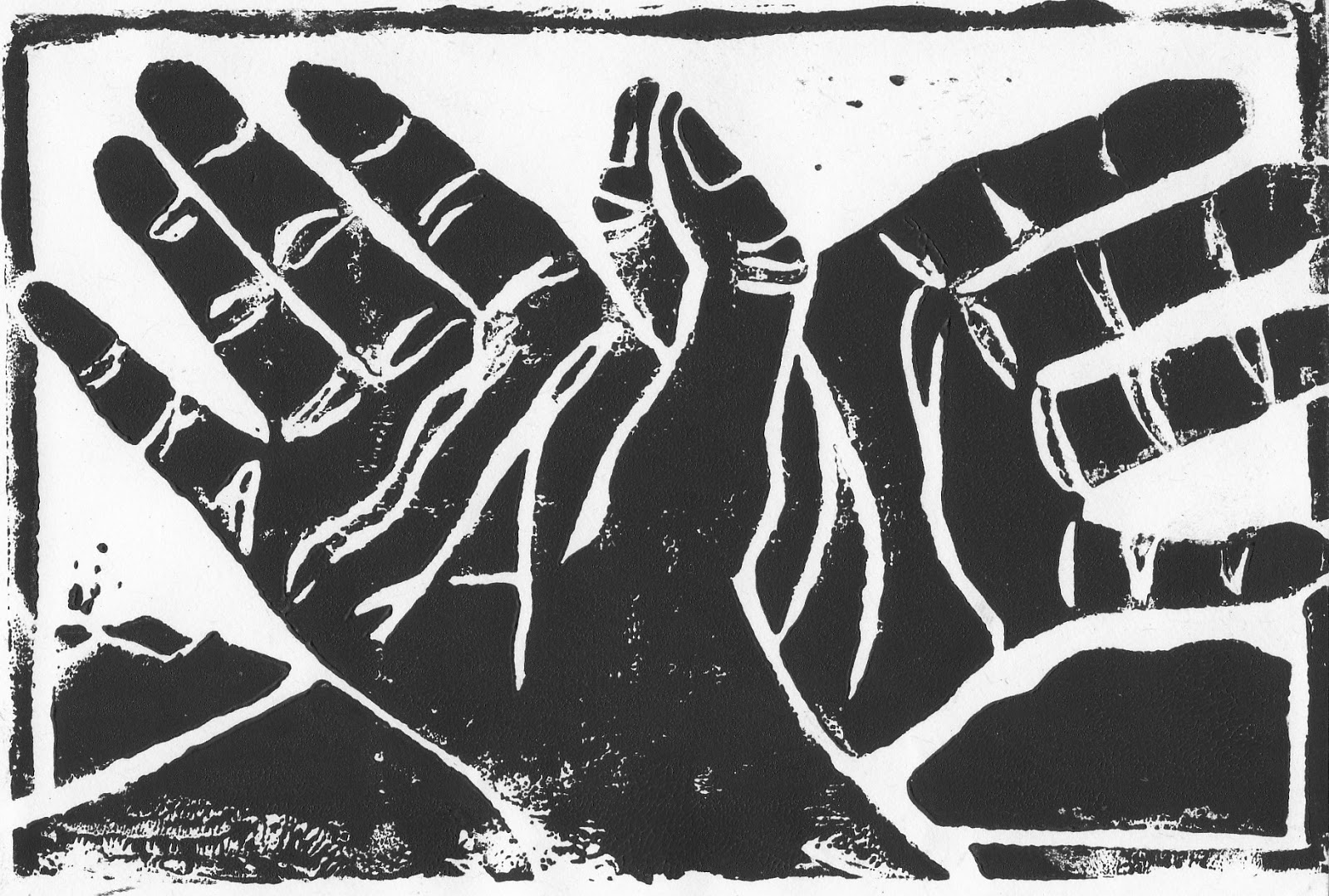
Love and Fire: A Prayer for Keystone


(I carved this listening to Obama's 2009 Inauguration.)

The Keystone XL Pipeline is still hanging too close to reality. President Obama has said he will veto it if the bill lands on his desk—and it appears all to likely that it will—and while I do love the idea of a man who ran on hope and change providing a decisive, dramatic, and heroic act in the eleventh hour, I both do and don’t understand politics enough to hold my breath.

Besides, either way, we—the fighters for and livers of a life away from unquestioned fossil fuel dependence—have already won.

To be sure, Keystone has become a symbol as crucial to the climate movement as a keystone is in an archway. But the extraction of tar sands and their rickety conveyance through the hearts of three sovereign nations is not merely a symbol, which is precisely why this pipeline has proved to be such an effective rallying point.

And I fiercely want that oil to stay in the ground, in the tar sands and out of any pipes through anyone’s backyard and water supply. I want the carbon unreleased to the atmosphere and TransCanada to go bankrupt. I cry whenever there is news about Keystone’s lumbering progress through the State Department, the House, the Senate, now the House again. I cry equally when I hear more and more about popular resistance and public displays of most personal outrage at the threat of corporate profit and carbon pollution over all else.

But, again, regardless of how Keystone leaves Obama’s desk shortly, we’ve already won. A passionate and educated movement has been built. Keystone, lightning rod of debate and symbolic reality, has provided the time and space for legions of citizens to become aware of the climate change, and the role that fossil fuel industries and cooperative governing bodies play in this new devastation of the world.

Knowledge, friends, is power. However Keystone goes—and if I were a praying woman I would do so now; instead I write—we have learned and so are unquantifiably powerful. We have learned what is at stake, what the machinations are that try to stamp out the rebellious, undeniable truth that drives each of us in our separate ways. This kindling of love for our lives and landscapes, for a planet and the fire of outrage at all that threatens what we hold dearest, this is a force to be reckoned with.

We must hold that love and that fire. Keystone is one battle. The public and common sense opposition to the pipeline has been beautiful, but our future is larger than a single pipeline. This may well be a turning point in the fight towards the cleaner and kinder future we hunger for, but the day after the Keystone veto will still be one of the hottest for its date on record, glaciers will still melt, and corporations will still have more influence in politics than you or I, regardless of how loud we yell or deeply we love the earth. The day after, we must continue as we have, pushing and acting and growing towards the solutions we are finding as we go.

This outcome-neutral forward momentum is when we will need the love we have found in fighting Keystone. This is why and how we have already won, because through veto or passage, feast or famine, we have found the truth in our hearts and land and our strength to speak and live into what we believe.

And no outside force can ever change that.

(The love of this place is part of what drives me forward and keeps me going when fighting climate change.)

Tuesday, January 20, 2015

Lessons from Terrorists

(Annie Leibovitz's photo of Pete Seeger 
and his banjo/hate crushing machine, from hilobrow.com)

Recently, friend and I were talking about the news. She had found herself absorbed by in-depth coverage of various horror spots of the world in the past few weeks. 

And, like most people who do so, her rapt attention slowly ceded to questions of if knowing all the available facts about violently-faith-based guerilla executions in France, about the deep harm racism causes in this country, about global temperature records being newly broken every year, if knowing all this news makes a difference.

I don’t know. Listening to the news doesn’t seem like much of a way to work for change. Listening, reading, being informed, even worrying in the night, seems so passive, and this news—this terrifying constant news—makes us want to rise up out of our seats, storm the castle and end the madness.

I don’t like the word “terrorist,” but as I can’t come up with some better term for these agents of sporadic, focused, devastating violence, it’s the word I’ll use.

We would do well to learn from these terrorists. Not in the sense of vengeance and violence, but in their manner of shaking up the world by of being small independent cells of individuals who are devoted to, but loosely affiliated with, a set of unifying ideals. Part of what makes the world seem scarier—other than overlistening to the news—is the idea that the terror and violence could come from anywhere. “Enemies” are no longer swathed in flags or behind iron curtains and cement walls.

And so, I believe that heroes are no longer to be found covered stoically in brass buttons or wearing capes or riding high white horses and protecting people like shepherds or inhuman angels. As the threats become more nuanced and personal, so too must the heroes, the solutions, the progress evolve into something growing and curling with shoots and branches and tendrils.

If terrorists can be home-grown lone-wolves, so can those of us who would have the world be better than it is. I have to trust that there are more people out there who want and believe in peace than who want and believe in violence. To think otherwise is fodder for those who would use fear as a weapon.

Guerilla acts of peace, carried out by passionate individuals loosely affiliated with ideals of human rights and world salvage, will not make headlines. But I believe that this is exactly what we must do, all of us, everywhere, every every minute.

And that is as pat and impractical piece of advice as possible. Being kind won’t stop a bullet or shut down a power plant, for example. But, we’re no longer in a world of one-to-one exchanges, of eye for an eye and vengeance Or if we are, I want to make a new one out of different materials. The opposing sides don’t march out to battle on a field. It is, entirely, regime and ethos change that we’re after. And, in that, being kind and doing all those small and daily acts that bring joy and love into the world, that affirm that all lives matter, that align the personal with the political…it does all add up to make a difference.

When it feels like your little actions—unplugging the dryer, smiling at strangers, telling people you love them, joining a CSA, lobbying for legislation, marching in the streets, whatever it is that you can do to put love into the world—are teensy drops in the bucket, think of this: you are part of something bigger than yourself. It helps, I find, to feel like I am part of a secret revolution, full of sleeper agents and unmet friends. Doing good is the password. Whenever I see solar panels, I either tear up or grin my face off, reminded that others are in this as well. We give each other strength and ballast with all our actions.

I believe—because I want to believe—that love is stronger than fear. It is slower, it does not make the headlines or trend on social media, but it is eternal. Our revolution doesn’t need to be secret, of course, but neither does it need to be televised to be effective.  Let’s have a revolution waged—daily—by peaceable guerillas who are loosely affiliated with and united by our faith in the world and each other.

That is the best news I can think of.

Monday, January 19, 2015

Emma Goldman and Dinosaurs

Emma Goldman, 1886?
In July of 1892, the Labor activist and Anarchist Alexander Berkman shot Henry Clay Frick three times. Frick, at the time, was the Chairman of the Carnegie Steel Company. The steel mill in Homestead was in the middle of a major and violent dispute between the fledgling labor unions and management. In Living My Life, Emma Goldman’s autobiography, she writes: “the philanthropic Andrew Carnegie conveniently retired to his castle in Scotland, and Frick took full charge of the situation.” (I am basing the following synopsis on Goldman's account in her autobiography, and am, undeniably biased in favor of the anarchists and labor activists over the industrialists.)

Frick refused to negotiate with the workers and the unions over labor contracts, fired the mill workers, evicted the workers and their families—including at least one very pregnant woman—and hired strike-breakers—who were probably in dire economic necessity themselves, even more newly arrived immigrants who were compelled to take the most immediate source of income that presented itself. These striker-breakers were protected on their route to the mills by the security forces Frick hired from the Pinkerton detective agency, a group which seems particularly prone to being well-paid by the powerful for unnecessary violence against unions and activists. In an altercation between the striking workers and the hired “security forces” several strikers—including a child—were killed.

Berkman, Goldman, and their circle of friends were outraged and, while they felt no real personal grievance against Frick as a man, they determined that he, as an active symbol for all of the inequity of power and dignity that the Labor and Anarchy movements sought to alleviate. They were young and passionate and utilitarian, and so their solution was that Berkman would kill Frick, and that Berkman’s own likely death as an outcome of this would be forfeit for their ideals.

A week of nightly experiments with bomb making in a cheap and crowded tenement—thankfully—yielded nothing but lost time and money when the dynamite turned out to be damp. The back-up solution was that Berkman would go to Pittsburgh, work with the local Labor-Anarchist groups, buy a gun, and assassinate Frick. The major trouble with this plan was that guns were expensive, especially for impoverished Anarchists who were working 18-hour days at menial paying work and trying to start a thousand revolutions with their spare hours. Emma Goldman, who was remarkably well-read, decided that the only course of action was to take a page from Crime and Punishment, and prostitute herself for as long as it took to earn the money for Berkman’s gun. As she wrote, “Sasha [Berkman] is giving his life, and you shrink from giving your body, miserable coward!”

So, Goldman spruces herself—cheaply—up, and trudges out to the street, and hates every minute of it. The man who approaches her buys her a beer, senses that this is not a job that Goldman will ever be any good at—although he doesn’t agree with Goldman that most women who become prostitutes are driven to the profession out of dire economic necessity, rather than “mere looseness or love of excitement,” as the man terms things—and pays her ten dollars to go home and wash her face. 

That money, plus the fifteen dollars Goldman borrows from her sister—after lying that she needed the money because of illness, which seems like the worst crime in this whole twist of mixed morals—buys the gun that Berkman shoots Frick with a few weeks later.

In the ensuing struggle, Berkman also stabs Frick in the leg, before Frick’s people knock Berkman out.
Berkman went to prison for fourteen years. Frick, with the 1890s version of top-notch medical care, survived. The Homestead Strike fizzled out amid public outcry at the violence—on both sides, now—with few gains for workers.

Eventually, Frick’s New York City mansion, home at one time to the three-member Frick family and their twenty-seven member staff, became the Frick Collection to showcase Frick’s personal art collection.

Lady Agnew of Lochnaw, 1892
Elsewhere in 1892, the painter John Singer Sargent made a portrait of Gertrude Vernon Agnew, the wife of a Scottish Baron. The painting helped to launch Sargent’s career of painting glamorous portraits of beautiful rich women, and also advanced Lady Agnew’s career as a society lady.

For the last month or so, Lady Agnew of Lochnaw has been hanging in the Frick Collection, on loan from the Scottish National Gallery.

Personally, I find Lady Agnew of Lochnaw as visually resonant as I find Emma Goldman’s writing politically resonant.

They make an odd pair of icons, and would have probably classistly hated each other. That their respective hey-days were the same era is stranger still. While industrialists built libraries, collected art, made fortunes off destroying the natural world with ignorance and greed, and hired security forces to beat up workers, crusaders for social reform were holding meetings, working long hours for little money, reading, writing, rabblerousing, opening ice cream parlors, plotting assassinations, getting beat up by police and paid security forces, going to jail, and always fighting for a fairer world.

Do Carnegie’s many libraries, does the art displayed at the Frick, does that absolve them of the inhumanity of how they made their money? Does the intent of a violent action—like an assassination attempt or the touch and go of building a bomb in a crowded apartment building—out weigh the violence itself?

And it is easy, very easy, to say of Frick and Carnegie and Rockefeller and Morgan and all the rest of the major industrialists of that early era that the times were different, that isn’t it—in the end—good for the public that they made all that money and had it to build public edifices? There is a sense that this sort of industrially financed public offering is a PR absolution for really dirty and inhumane treatment of workers and ecosystems alike. And that such acts were of the past.

After visiting the Frick to see Lady Agnew in person—in a place that wouldn’t have been if history had gone differently—I went to the American Museum of Natural History. This included a long and wonderful saunter through the David H. Koch Dinosaur Wing.

Koch, as in the Koch brothers.

As in the family that seems to use their—mostly fossil fuel derived—fortune on political causes that run completely opposite to my own beliefs. Never mind that their profits, as a fossil fuel company, come from our blind obedience to the climate-change causing status quo.

Just a few weeks ago, the long struggled over Cape Wind project in Massachusetts was felled by power companies pulling out, nearly eliminating the market for wind-generated electricity from a wind farm in Nantucket Sound. Bill Koch, David “Dinosaur Wing” Koch’s brother, has donated over a million dollars to fight against Cape Wind—possibly because the view from his summer home would now include clean power sources—threatening his lifestyle—as well as the oceanscape. When one side of a political fight is better funded—corporate and political leaders versus environmentalists and scientists, say—it becomes easy to see that people and common sense are worth less than dollars and influence.

Now, I’m not advocating for assassinations of corporate leaders. Or anyone else. Everyone's parents and children and friends love them, I suppose. Our challenges in the climate change and human justice fields are, these globally-connected days, more systemic than the elimination of any one person could solve, anyway. Violence helps no one and only scares people away from joining a revolution.

Something, though, does need to change and be shaken up and rearranged. Starting, I think, with what we question and what we blindly accept. When push comes to shove, I’d rather have the dinosaurs stay in the ground than become either a museum exhibit or climate-change and fortune causing fuels. I’d rather all people have good useful work they feel confident in and be paid a living wage than have one man open a museum filled with artwork that his workers could never afford to have seen.

Push, though, will never come to shove. Powerful people will continue to buy off and silence opposition to their profits with pretty things. No one is going to ask me to decide if I like dinosaur bones in a museum donated by rich men who make a fortune but destroy ecosystems more than I like Tuvalu or alpine flowers or the clear lungs of Appalachian toddlers, and then re-arrange the world order according to my whims while I sit back and wish things were different. No one is going to start this revolution except us. We must, ourselves, use every day as an act for the world we want.