Showing posts with label activism. Show all posts

Tuesday, March 14, 2017

Rose Heat


“as the brick of the afternoon stores the rose heat of the journey” is the opening line of Gareth Evan’s poem that opens John Berger’s vital book Hold Everything Dear.

My head changed the words to rose heat for the journey, a small change, really, just one letter more and a bit of reshuffling, and there we are. I think of this when I see leaves soaking in sunlight, when I see logging trucks on my New England highways, when I put wood into fires, when I absorb and absorb and absorb the particular golden light of sunset, when I try to hold onto fierce peace of wild things, when I reach down within the best of myself to do good work in the world, to stretch my hands out like tree branches and become awake and aware and alive in the world.

The certain knowledge that people who live in the same neighborhoods as me, who shop at the same grocery stores, walk the same streets and pause to look up at the same shrieking seagulls and sunlight on the water…that these nearby strangers are having their doors knocked on by the government, that the phrase “show me your papers” isn’t reserved for Nazis in movies anymore, all of this is calling up on all the wells of rose heat I’ve ever stored for any journey. It’s stored up and spilling over—and some days starting to leach away—because I do not know the right outlet for all the love and concern I feel for all this beautiful world.

A student told me the other day that he had been seeing a lot of bald eagles around the college. Maybe, he said, it’s just the same one over and over again, but it’s still pretty amazing to see. I agreed, took heart at the wide-eyed wonder of someone even just a decade younger than me, and thought about how close bald eagles and other birds came to extinction before DDT was banned, before the EPA was formed, and how much love of the world is in real danger. When I lived in Montana and was hiking with a friend, a bald eagle swooped low over our heads and my friend said, sweetly, “Thanks, Rachel Carson!”—almost the way another set of believers would thank something more divine than human for the same gift of wonder.

As an environmentalist, as a human, as a Feminist, as a woman, as an American, as all of the ists and ans that I am, I feel as if I am trying at once to stand my ground, but that ground is being eroded on all sides. I know how the system is supposed to work—and I call my Members of Congress regularly, I attend neighborhood resistance meetings, I work at a college with a refreshingly honest dedication to sustainability—but I still feel beset on all sides and cannot help but see that the system is either broken or atrophied.

At my job, we’ve been discussing the opportunities for increasing the solar capacity of the college, in pursuit of our goal of carbon neutrality. The trouble—aside from the particulars of finding appropriate roof space or expanding a ground array—is that power storage technology is not yet advanced enough to meet what can be produced. On top of the storage, there is an inherent transmission loss of about 5% between production and use.

These all the same problems of storing and carrying rose heat for the journey.

I am at a loss for how to transmit my love and fear into power and change. The infrastructure of democracy seems in disrepair or decay or simply unable to handle the loads we require of it. We must reawaken it even as we seek to rebuild it, put new and different flesh on its bones. As much as I want to stand and speak and write and vote and donate and do all that I feel called to in the service of what I love and long to protect, I feel sometimes like I’m standing on the seashore and the tide is dragging the sand out from under my feet.

The truth with that, though, is if you stand long enough the sand holds your feet and ankles fast. And the tide always returns.

This is when it starts to get hard. The first month of euphoric disbelief and galvanized activism for a just America, that was a special time. Now, nearly two months into the buffeting winds of Muslim bans and abhorrent Cabinet picks and healthcare evaporating for our elders and empty promises of jobs and undeniable ties to a notably violent regime and the re-normalizing and re-institutionalizing of racism that had almost started to poke out into the sunlight and be rectified…now is when the journey really begins. And we must carry our rose heat forward in whatever forms and vessels we each can. It may be pussy hats, it may be daily calls to Members of Congress, it may be entering local politics, it may be opening up our spare rooms as safe havens, it may be increased mindfulness and a falling in love anew with the world so that we recall the value of what we protect, it may be and must be whatever each person has time for, now that the blush and fury of the first romance with activism has worn off with time, and the recognition of how much work this truly entails.

We are all vessels of power.

Tuesday, November 15, 2016

Understanding the Uncomfortable


I’m a white cisgender able-bodied straight woman in New England. I am unlikely to get shot by cops, harassed for my religion, deported, drafted for a nuclear war, or, really, have much worse happen to me under Trump’s administration than have more job prospects disappear, the planet melt, and my access to birth control further limited. My chances of being sexually assaulted are still about one in five, although that may increase if Trump’s ascendancy makes sexual predators feel more entitled. So, largely, I can write safely and compassionately about understanding the white working class frustration that fueled Trump. As I find myself saying frequently, understanding is not the same as condoning.

It’s not, exactly, that I am surprised that Trump won—just stunned and saddened because the rhetoric of his campaign was so vitriolic, and I hate that so many people found resonance with that anger. I suspect that the anger of many of Trump’s almost entirely White voters has more to do with a fear of losing identity, of wanting to make sure that, in a growing and changing and browning and gender-changing America, there is still a place for them, for the life and the values they know.

That fear of being left behind, of losing your place, losing a place, in the world, I understand. My father once stood up in a crowded bookstore, in an almost entirely female audience, to ask Terry Tempest Williams a question. Williams was on a book tour for When Women Were Birds, about her relationship to her mother and the women in her family, and my father’s question was, “where is your father in all of this, does he have a place in this story?”

Williams answered warmly that her father did, and my dad sat down, and I deeply regret that I can’t remember now if I ever told him how proud I was of that moment, what I learned in it. To me, that exchange, crystallized my understanding that as movements for social change go forward, that as Progressives work for equal rights, representation, and opportunities for women, Black, Brown, LGBTQ, immigrants newer to America than ourselves, and non-Christian people, we cannot overlook that to change the country—as I believe we must—this is going to intrinsically make, particularly, straight White men feel like they don’t have a place anymore. That lack of inclusion is a disservice, and as it turns out, a disservice that is dangerous to everyone.

I don’t believe that White America is under an assault, that we need to let straight WASP dudes be in charge again forever because they get sad (or dangerous to everyone else) when they don’t get all the seats at the table, but I do think that, as Progressives, we have been narrow-minded and unkind when it comes to this issue. We have not embraced diversity that did not agree with our ideals. We have not been open-hearted, we have not understood that shifting the balance of power is as out and out shitty for some as it is bold and beautiful for others.

That said, it is an unacceptable response to our liberal idealistic ignorance to have misogynistic, climate change denying, White Supremacist billionaires running the country.

I don’t know what to do about it, exactly, but I do know that I am open to almost all suggestions. I think that Progressives like myself will have to change our tactics, because all of the pot-luck rallies, listening sessions, membership drives, candlelit vigils, direct actions, writing letters to Congress, laboring for policy changes in a corrupt system, Black Lives Matter marches, bike lanes, and all the rest that we—that I—have put such idealistic faith in, believing that by doing so we were curving the arc of history so sharply to justice, these activities have not been enough, this time.

Which isn’t to say we should cease to do whatever both feels good for our souls and is socially effective. My faith in that arc of history is shaken and I am appalled at my own ignorance at how long the arc is, how hard progress is to come by and sustain, but I’m not giving up on justice.

How we go forward has been the grief soaked question of Progressives this week. Real things—a registry for Muslims in America, a climate denier at the head of the EPA, a tacit affirmation of White Supremacy at the highest level of national government, Trump selecting Supreme Court justices—are happening. The fox is in the henhouse, and no amount of good intentioned hand wringing will take it out again. For a hopeful people—Idealists, Liberals, Progressives—we need to grieve, and accept reality. Not submit to it, but accept it.

As an environmentalist, I have long been reconciling myself to the reality that we cannot go back in time, that the damage of climate change is irreversible, that all the best energies and efforts cannot hold back the tides already risen and still rising. We can mitigate the damage, we can build for a more sustainable and resilient future, but we cannot erase what we have done. And, we have done this, but failing to understand the perspectives of those who see the world differently. Everyone can embrace the alternate realities of Harry Potter and Westeros, but we cannot understand our own families, our own fellow citizens, and how they world and their eroding or aspirational place in it differently than our own values and experience?

We cannot change the past, we do not get a do over. Instead, we go forward with the best that we can, we do all the things—protesting, rallying, running for office, stepping down from privilege to let others step up, listening and understanding. And this includes understanding why Trump won—because many people were scared of losing what they have, losing who they are, and finding their beliefs unrepresented in government.

I believe that same fear of loss of identity and power is at the root a lot of the Progressive angst and sorrow this week—we thought the world was leaning one way, our way, and it tilted over “against us.” This may be the most uniting force in our country at present—if we can remember that most of us aren’t evil, we just want to be seen and heard, to have a place and a purpose, and the pride of our families. 


Monday, October 31, 2016

Standing Rock

(Image from JustSeeds.org)

I’m not in Standing Rock, North Dakota. I’m not planting my feet on the ground that contains my ancestors, placing my flesh and blood between the land and our culture’s insatiable lust for oil and the incomprehensible power of profit. I haven’t been arrested, held in a jail cell or a dog kennel. I haven’t screamed at the law enforcement of collected states and departments and representatives of governments and corporations.

And I have been wondering why I’m not there. I know these things matter. I do not want oil to spill into any landscape, upon the bones of any ancestors, into the waterways of the living, into the endocrine systems of the unborn generations. I do not want the dangerous patterns of our consumptive lives to continue unchecked, unchanged. I want the sovereignty and dignity of Native peoples—in North Dakota and across the globe—to be upheld and broadened, not beaten down further and ignored yet again. Colonialism, white supremacy and capitalism—all of these forces have pushed peoples out of homelands and towards the marginal land and seascapes that are now most at risk from the climate change brought about by lifestyles less grounded and intentional that many that were displaced. I don’t treasure an image of indigenous peoples as noble savages—that lack of nuance and excess of Romanticisms covers up far more interesting realities and prevents humans from seeing each other with empathy, and as the hot messes of contradictions we all are. However, I do believe that there are societies that have much more sustainable values than the majority white, post-Industrial Western Capitalist one that destroys landscapes to find the oil that, when burnt in power plants and refineries and gas tanks, destroys the air, the water, the seasons, the planet.

I’m still here in New England, though, not in the Dakotas. I daydream about these actions, these times of solidarity when bodies come together to block pipelines and trucks, but I never go. I stay here because I need to pay my rent, feed my dog, repay my student loans, tend to my family, because my life is here and I feel enough binding me here that I can’t imagine going without creating more, or maybe just different, burdens. Am I just making lazy and selfish excuses to stay comfortable? Do I not believe enough? I wonder these things in the middle of the night sometimes. If I really cared so passionately about climate change, about being in solidarity with a cause I believe in, wouldn’t I be there, linking arms and marching and standing and holding firm despite the consequences, rather than going to the grocery store or making mundane appointments for my car inspection or looking at the container ships come into port and knowing that their oily effluent is mingling in the sea with my father’s remains, and I am standing on the beach, throwing a tennis ball for my dog.

If I really wanted the present and the future to be brighter, better, cleaner and kinder than the patterns of the past, shouldn’t I, shouldn’t we all, be out on parade and picket lines?

I don’t know. It simply isn’t practical—if everyone is arrested, who bails us all out, makes soup for everyone, takes care of the young and the elderly, installs solar panels, plants gardens, negotiates climate and human rights agreements. I admire those who are putting their lives on hold and on the line to stop pollution from crossing national boundaries and poisoning the land and water and sanctity of the place. Similarly, I admire the people who labor through zoning board meetings, who figure out how to live off the grid, who temper their egos enough to carpool or take an inconvenient bus, who raise kind children who love vegetables, who run for office with integrity and practical idealism, everyone who does the thousand quieter jobs that transitioning away from fossil fuels truly require.

And it is not the same to do this small work. I was sitting in my apartment, prepping for a job interview by researching grant writing and best practices for sustainability in higher education, while watching friends on Facebook check in at Standing Rock. And I wanted us all to be there, for real. To be all together, fists high and smiles wide, walking into the fray and saying, firmly, that this dirty way with pipelines and trampling lives and beliefs for profit and out of a lack of imagination of how to implement a cleaner world will no longer be. I wanted the drama and the Romance and the certain solidarity of such direct action.

Because doing the quiet necessary work is hard. Not in the way that having red raw marks on your wrists from zip-tie handcuffs or being violently intimidated or beaten by law enforcement or being a civil disobedience felon or living in a protest camp is hard—and I do believe those are hard things that people chose to do—but because you have to get up every day and find a balance of practical action while navigating life.  It is hard, it is not glamorous—movie stars and Bill McKibben and Terry Tempest Williams and Wendell Berry are not going to join you in signing up for a CSA or doing an energy audit of your home or going to a meeting of the water board—but it is perhaps as vitally important.

Which is what I’ll keep telling myself, as I do what work of the world as I can in Maine, while it remains Facebook official that I’m in North Dakota. 

Thursday, March 31, 2016

A Numb Fury


Lately, when I hear about coral reefs being bleached, or particles of carbon in the atmosphere, or rabidly migrating invasive species, or any and all of the other news about our changing climate, I find myself a bit numb.

Which is odd. I’ve been so long on the side of the passionately hopeful, believing that if we care enough and act humbly and wisely enough, we can yet pull of this grand trick of saving the world.

And I can still say and write the right the words, but they have an ashy hollow feeling now. I don’t seem to be able to work up a lather for presumed demise and resurrection of the abstract as well as I once could.

What has changed?

Just that I am learning to live with loss and I no longer believe all wrongs can be righted with enough love and elbow grease. My father died in April, my uncle died in December. The shape of my world is vastly altered without these wonderful men in my life.

I hate it. I miss them every day and may never believe that I’ll never speak with either again, never hear my dad’s laugh or make terrible puns with my uncle. I’ll never hug them again.

It is unmooring, to have beloved constants there one minute and then going, going, gone forever.

This, somehow, makes the presumptive loss of life on Planet Earth at once easier to comprehend the scope of and less acceptable to allow to happen unchallenged.

We cannot repeat the past. We cannot turn on a dime to restore old-growth forests, pump crude oil back in the ground, unbleach the Great Barrier Reef, or grow back eroded coastlines. We cannot bring back the dead or live in the past.

Speaking historically and climatically, the past wasn’t perfect. The past was where we learned to haul oil and coal out of the ground and burn it, before we knew what damage it could cause. We learned to put it in our cars and airplanes and factories before we knew it could get in our lungs, before we knew that more isn’t always better. We hunted species to extinction and poisoned our waters. When we talk about protecting and preserving, about re-growing former environments, it starts to sound like an idealized past we are trying to recreate. We’d like, please, a second chance, to hit reset with all of the rainforest, but none of the pollution.

My personal past wasn’t perfect. My father had alcoholism. Living with and loving him was a lot like being in a hurricane zone—the erratic storms of his moods were unpredictable, regular, and unnavigable. I don’t know why he drank—other than addiction is a sort of emotional and chemical parasite that, inside people we love, creates a need greater than any other for whatever substance feeds the monster of the disease. I don’t know if there was anything more we could have done to help him to stop before it killed him. The part of me that may never heal over Dad’s death is that it was preventable, but between his disease and our furious loving ignorance at how to help him, the disease won, rather than all the brilliant and kind and creative and big-hearted parts of my dad. The monster won, not our love. That will always sting.

I don’t want that past back, fully. I want the good parts, with our lessons learned all around, so that we can go forward whole again. I have thought, so many times, that “I get it, I’ve learned how much I love my dad, how fragile and brief life is and how much people matter. I’d like him back now and I know that the man he was in the week before he died learned his own lessons and would like to come back too, please!”

But we don’t get that. No one, no place or species or ecosystem or weather pattern gets to hit restart.

The last thing I heard my father say—almost exactly a year ago—was “it’s going to be okay, it’s all going to be okay.”

As last words go, they aren’t bad. Sometimes I find them comforting, other times so infuriating that I’ll scream. Because it hasn’t been okay, it isn’t okay, and it will never become okay that this was how my father left the people and the world he loved so much.

It has also, with a terribly normality, become okay that he isn’t here anymore. Not always, but the unimaginable has become the daily and the real, and we are all adapting but surviving to this new world.

If my father could have been treated for his disease before it was too late, he would still be here. If there were a treatment for my uncle’s rare and aggressive cancer, he would still be here.

When I think about climate change, I can’t help thinking that we do have all of the information and the science and many of the solutions staring us in the face. And yet we are choosing, with our inactions, not fix the problems before us. I have seen people die for lack of treatment and intervention, and I can't fathom that we're as people letting the world waste away when we have enough of the answers to be smarter.

I think that my numbness at re-hearing the same but worse climate news may just be sleeping fury that what can be salvaged in this world with its biological prerogative for life and survival, adaptation and resilience is not being treasured. Treatments to the causes of climate change are well-known (use less, think more), the science is in that we are doing this to ourselves as a people, life is short and the world beautiful…what else do we need to know in order to act?

Thursday, March 19, 2015

The Powerful Play


(from NASA.gov, and while I have questions about exploring other worlds when we aren't treating this one and all the life on it with respect, it is still a beautiful picture.)

Sometimes, like today, when the sun is shining and I have yet to hear any truly horrible news for the day, it begins to seem that we are going to win. We, to me, are the loose collective of people working across all continents and disciplines to make the world a better and cleaner and more just place for all living things. Some of us are working in offices, filing papers and lawsuits against unjust entities and laws. Some of us are artists, stretching the materials of this world into shapes and sounds and stories that make other believe in our wildest imaginings of better. Some are teachers, are builders and farmers and activists and researchers and scientists and mentors and all the wide range of hues that it takes to sustain and build this necessary revolution that we hope and hunger and act for.

Too often when we speak of doing enough, of doing all that we can, there is a thread of guilt weaving it all together, that more must be done on both the individual level and the global level. Somehow, between dire news reports and a culture of multi-tasking absurdity, there is a pervasive sense that we must each be passionately able and willing to chain ourselves to a coal mine, participate in the somewhat damaged political system we could still salvage, march in the streets for racial justice, procure food from local sources that do no harm, see the world, maintain loving and supportive relationships, remain financially solvent and constantly informed on the issues of the world, and keep the carbon footprint of a sparrow. Trying to balance all of those pieces will make a person crazy. I regularly worry that I am not hitting the right balance between all the things I try to and would love to do. And I know that I am not the only one who feels stymied in resisting, in being part of a revolution, in living the life I believe possible.

My real worry is this: that some bright day I’ll wake up and the world will be better, that the need and chance to resist and revolt and rebuild will have passed, a new era dawned, and the further shore will have been reached and I will have not done what I most wanted to. That Walt Whitman’s powerful play will have gone on and I will have not contributed my verse. It is not the contribution itself that matters as much, I think, as the personal act of contributing to this amorphous revolution for a better way of life on Earth for the planet and all people. The revolution will happen without me, of course, but out of love and celebration for all that is at stake, I do not want to let my verse go unsung.

I spend a lot of time thinking about Mary Oliver’s question of what I plan to do with my one wild and precious life. Again, I know I am not alone in this—my life is full of brilliant people trying to find the best home for their gifts and love of the world and to live the lives we want and believe in. Sometimes it seems like there is a divide in how we each live—that one can either live change on a large or small scale. In the large scale are the standard-bearers and martyrs and the public figures who we all follow, who’s words and example drive a great deal of inspiration and change. They act and speak for causes that live deep in the hearts of many, and become the names and faces of change and resistance and revolution.

And then there are the people who cannot attend marches because they have to tend their loved ones, who cannot afford to get arrested for civil disobedience because of the responsibilities they bear to others. Or the people who are beautifully suited for the rigors of research, or who delight in the arcane details of law and policy and find ways to weave justice back into our world’s systems. Or people who shun the spotlight but can grow anything on a patch of land. Or who repair bicycles or run thrift stores or wait tables in the cafés where revolutionaries plot their deeds. Or people who are able to shift out of the structures and shoulds of the mainstream world and go off the grid.

There are so many right answers of how to live. Our verses, and we all have them, come in as many tunes and lengths as we like. The important thing is to listen, hard and close, for your own. I believe that we all know, intuitively, the difference between what is right, authentic, and true, and what is not. Perhaps delivering your verse—in whatever form—to the world will make a splash, perhaps everyone will stop and see the fury and love behind your contribution, and this will be the pivot that turns the world in that direction. More likely, the world will absorb your verse as gently as a rising tide. It will matter most to yourself what you said or did, what the action clarified in your soul, and what truths you now know as well as your bones.

The reasons that we are winning, will win, are because more and more people of the seven billion of us are contributing our verses. The play becomes more powerful, and goes on in a different direction than had no one lived in faith and action of a better world. The world needs your verse exactly as desperately, as sweetly, as you hunger to contribute it—whatever form it takes.

Sunday, March 8, 2015

International Women's Day: On Prom-Posals and A Time for Outrage


For my recent birthday, some dear friends gave me a t-shirt celebrating Betty Friedan’s The Feminine Mystique. As you can see, it is fire-engine red and amazing.
I wore it the morning after my birthday to clean up the minor wreckage of a good dinner party. This sartorial choice wasn’t a statement open to some post-umpteenth-wave of Feminism ironic interpretation along the lines of, "we’re now so evolved as society in terms of gender equality and identity, a lady such as myself can freely choose to do the duties of a repressed housewife, even while wearing the garb of revolutionary propaganda." That is silly bullshit that I hope you read in a funny snooty parody voice. 
I was thus garbed because I wanted to wear my new shirt, the kitchen was littered with dirty dishes and I don’t much like living in filth, and it was my mess to clean up.
I find even the ghost of an idea that we’re in a post-Feminist society absurd.
We aren’t.
As an example of how I fear we’re backsliding as Feminists in important and emotional ways, working at the high school, I keep overhearing clusters of boys worrying about how to pull off a good “prom-posal,” which is apparently now a thing. I hear girls giggling about how they hope they’ll be asked. One boy is making a daily series of riddles and clues for his date—presumably him actually asking her to prom is the treasure. Another is planning to buy red roses for everyone in his math class, have them one by one present the roses to his girlfriend—also in math class—and then he would come in last and give her a white rose and ask her to prom.
Prom is not my issue here—if teenagers want to get gussied up and dance and canoodle and have healthy consensual sex lives, more power to them. Similarly, I am 100% on board with Romancealthough I’m guessing that these kids haven’t learned yet that Romance is not really rose petals and pink hearts and proms, but someone bringing you Gatorade in the middle of the night when you have a violent stomach flu, or waiting up for your bus until dawn, or putting tennis balls on your walker and salt on the icy steps, or any of the other millions of ways that people demonstrate their actual, practical, messy love for each other.
In fairness, I didn’t go to my high school prom and so have no frame of reference on this allegedly all-important aspect of high school life in America. Aside from being painfully—almost snobbishlyshy, I had a track meet the next day and, while I was a lackadaisical athlete, that was a simple excuse to avoid what I at seventeen suspected would be a lot of fuss over nothing. The school dances that I had attended always ended up with me in the bathroom with one upset friend or another, dealing with some mismatch of expectations and reality. No matter how many teen-age rom-coms I watched, I suspected that real prom wouldn’t be much different than past dances, and having my mum make me a beautiful dress just to hang out in a fancier bathroom somehow didn’t appeal.
So, really, I’m not one to talk about proms per se. But, my issue with the prom-posal situation is that is seems both horribly stressful and indicative of trends that cauterize teenage girls as passive Princesses in need of asking, with the expectation that they will be asked and in a certain way, or they are not correct. Flipping that, this script for life requires that teenage boys are the actors, the one who gets to make the choice of what lady to ask, who pick the cast and create the lines. Ladies should just sit around and wait with absurd culturally engrained expectations to be asked to the dance, to life. Dudes should steel up against any fears of rejection, but remain emotionally open and Romantic, and pick a lady by doing something traditional but unique, memorable but not super weird. To culturally pressurize these traditional gender roles at young and emotionally fragile ages seems cruel and, therefore, against the Feminist agenda I believe in.
At the same time, I am mentoring a trio of high school students in a Feminism seminar this spring. We are compiling a list of readings and videos and music to study and explore. We’ve got Emmaline Pankhurst and Ida B. Wells and bell hooks and Betty Friedan and Wonder Woman and videos of 100 years of beauty in Black-American, White-American, and Iranian culture and more all set up and ready to go.
These students already know so much more than I did at their age about Feminist history and literature. On the other hand, I grew up with red and yellow and blue Legos and no Disney princesses. They are at once reading Angela Davis, and expecting rose petaled prom-posals.
Their emotional dichotomy seems different and somewhat more dire, to me, than cleaning the kitchen while wearing my Betty Friedan t-shirt. Or the common challenge of hating the Patriarchy and loving men.
If we read and know these things, but do not articulate them through our lives, does it matter?
Stéphane Hessel was part of the French Resistance in WWII and spent his long life working to resist various threats to human life and dignity. In his small and effective book, Indignez-Vous!: A Time for Outrage, he wrote about how, when he was young and resisting Nazis, it was almost easy because the enemy was so clear cut. Now, with globalization, instant communications, climate change, mass-marketing, and all the rest, the outrage is still easy, but knowing where to direct one’s indignation and action is more nebulous.
Last summer, someone asked me if I could give some examples of sexism and gender inequality still happening in this world. Similar to and as a part of Hessel’s nebulous enemies to be resisted, I feel that sexism is so subliminally and systemically omnipresent that it took me a minute to catch my breath and form words.
Sexism is everywhere and Feminism needs everyone—women, men, and those who have yet to make up their minds, as Lola says in Kinky Boots.
How we respond to this need depends on how we each get up every morning, what we put on and how we are in the world, what we ask for and what we expect from each other every day. Never mind International Women’s Day, it’s always Human Day.


Wednesday, February 11, 2015

Love and Fire: A Prayer for Keystone


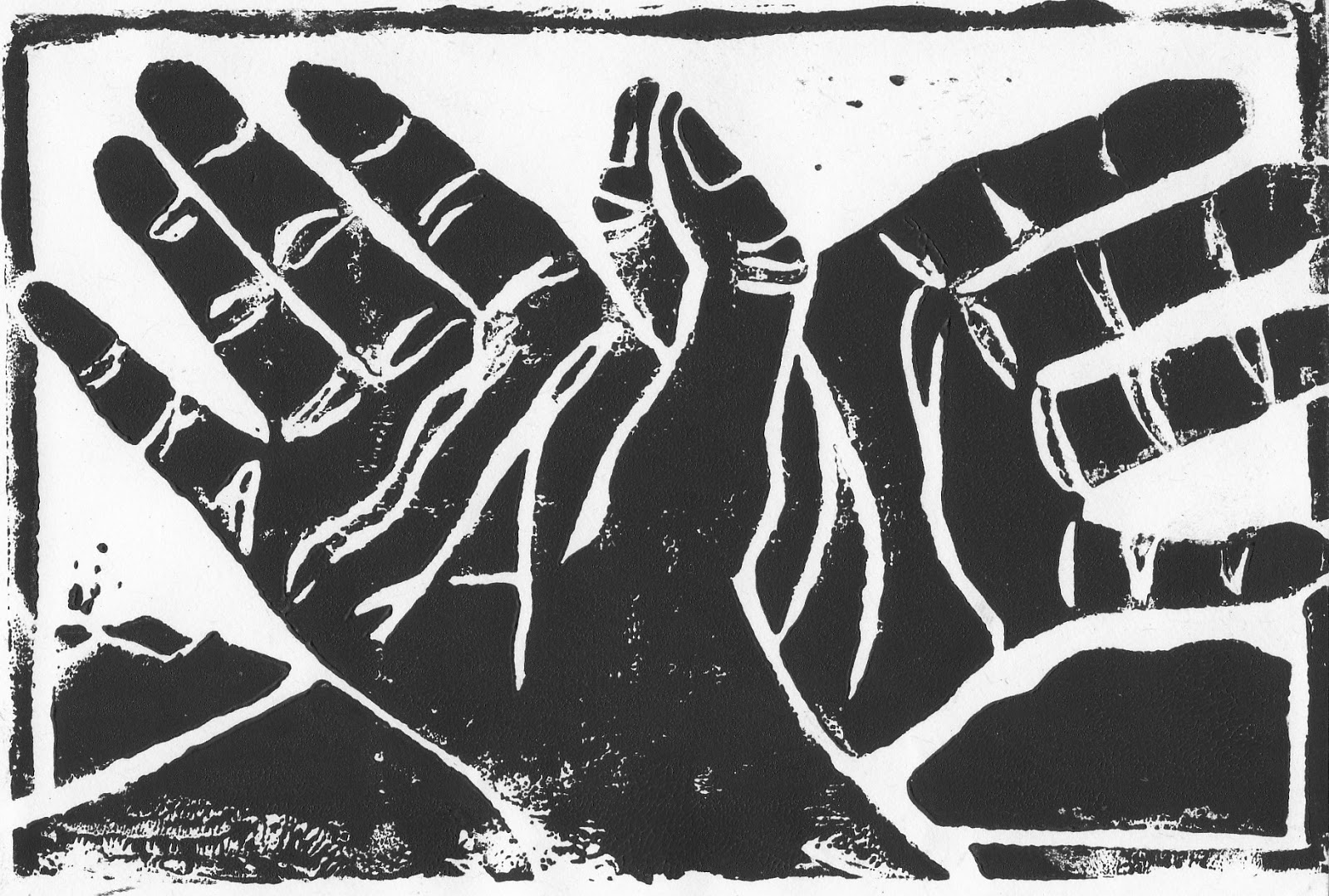
(I carved this listening to Obama's 2009 Inauguration.)

The Keystone XL Pipeline is still hanging too close to reality. President Obama has said he will veto it if the bill lands on his desk—and it appears all to likely that it will—and while I do love the idea of a man who ran on hope and change providing a decisive, dramatic, and heroic act in the eleventh hour, I both do and don’t understand politics enough to hold my breath.

Besides, either way, we—the fighters for and livers of a life away from unquestioned fossil fuel dependence—have already won.

To be sure, Keystone has become a symbol as crucial to the climate movement as a keystone is in an archway. But the extraction of tar sands and their rickety conveyance through the hearts of three sovereign nations is not merely a symbol, which is precisely why this pipeline has proved to be such an effective rallying point.

And I fiercely want that oil to stay in the ground, in the tar sands and out of any pipes through anyone’s backyard and water supply. I want the carbon unreleased to the atmosphere and TransCanada to go bankrupt. I cry whenever there is news about Keystone’s lumbering progress through the State Department, the House, the Senate, now the House again. I cry equally when I hear more and more about popular resistance and public displays of most personal outrage at the threat of corporate profit and carbon pollution over all else.

But, again, regardless of how Keystone leaves Obama’s desk shortly, we’ve already won. A passionate and educated movement has been built. Keystone, lightning rod of debate and symbolic reality, has provided the time and space for legions of citizens to become aware of the climate change, and the role that fossil fuel industries and cooperative governing bodies play in this new devastation of the world.

Knowledge, friends, is power. However Keystone goes—and if I were a praying woman I would do so now; instead I write—we have learned and so are unquantifiably powerful. We have learned what is at stake, what the machinations are that try to stamp out the rebellious, undeniable truth that drives each of us in our separate ways. This kindling of love for our lives and landscapes, for a planet and the fire of outrage at all that threatens what we hold dearest, this is a force to be reckoned with.

We must hold that love and that fire. Keystone is one battle. The public and common sense opposition to the pipeline has been beautiful, but our future is larger than a single pipeline. This may well be a turning point in the fight towards the cleaner and kinder future we hunger for, but the day after the Keystone veto will still be one of the hottest for its date on record, glaciers will still melt, and corporations will still have more influence in politics than you or I, regardless of how loud we yell or deeply we love the earth. The day after, we must continue as we have, pushing and acting and growing towards the solutions we are finding as we go.

This outcome-neutral forward momentum is when we will need the love we have found in fighting Keystone. This is why and how we have already won, because through veto or passage, feast or famine, we have found the truth in our hearts and land and our strength to speak and live into what we believe.

And no outside force can ever change that.

(The love of this place is part of what drives me forward and keeps me going when fighting climate change.)

Tuesday, January 20, 2015

Lessons from Terrorists

(Annie Leibovitz's photo of Pete Seeger 
and his banjo/hate crushing machine, from hilobrow.com)

Recently, friend and I were talking about the news. She had found herself absorbed by in-depth coverage of various horror spots of the world in the past few weeks. 

And, like most people who do so, her rapt attention slowly ceded to questions of if knowing all the available facts about violently-faith-based guerilla executions in France, about the deep harm racism causes in this country, about global temperature records being newly broken every year, if knowing all this news makes a difference.

I don’t know. Listening to the news doesn’t seem like much of a way to work for change. Listening, reading, being informed, even worrying in the night, seems so passive, and this news—this terrifying constant news—makes us want to rise up out of our seats, storm the castle and end the madness.

I don’t like the word “terrorist,” but as I can’t come up with some better term for these agents of sporadic, focused, devastating violence, it’s the word I’ll use.

We would do well to learn from these terrorists. Not in the sense of vengeance and violence, but in their manner of shaking up the world by of being small independent cells of individuals who are devoted to, but loosely affiliated with, a set of unifying ideals. Part of what makes the world seem scarier—other than overlistening to the news—is the idea that the terror and violence could come from anywhere. “Enemies” are no longer swathed in flags or behind iron curtains and cement walls.

And so, I believe that heroes are no longer to be found covered stoically in brass buttons or wearing capes or riding high white horses and protecting people like shepherds or inhuman angels. As the threats become more nuanced and personal, so too must the heroes, the solutions, the progress evolve into something growing and curling with shoots and branches and tendrils.

If terrorists can be home-grown lone-wolves, so can those of us who would have the world be better than it is. I have to trust that there are more people out there who want and believe in peace than who want and believe in violence. To think otherwise is fodder for those who would use fear as a weapon.

Guerilla acts of peace, carried out by passionate individuals loosely affiliated with ideals of human rights and world salvage, will not make headlines. But I believe that this is exactly what we must do, all of us, everywhere, every every minute.

And that is as pat and impractical piece of advice as possible. Being kind won’t stop a bullet or shut down a power plant, for example. But, we’re no longer in a world of one-to-one exchanges, of eye for an eye and vengeance Or if we are, I want to make a new one out of different materials. The opposing sides don’t march out to battle on a field. It is, entirely, regime and ethos change that we’re after. And, in that, being kind and doing all those small and daily acts that bring joy and love into the world, that affirm that all lives matter, that align the personal with the political…it does all add up to make a difference.

When it feels like your little actions—unplugging the dryer, smiling at strangers, telling people you love them, joining a CSA, lobbying for legislation, marching in the streets, whatever it is that you can do to put love into the world—are teensy drops in the bucket, think of this: you are part of something bigger than yourself. It helps, I find, to feel like I am part of a secret revolution, full of sleeper agents and unmet friends. Doing good is the password. Whenever I see solar panels, I either tear up or grin my face off, reminded that others are in this as well. We give each other strength and ballast with all our actions.

I believe—because I want to believe—that love is stronger than fear. It is slower, it does not make the headlines or trend on social media, but it is eternal. Our revolution doesn’t need to be secret, of course, but neither does it need to be televised to be effective.  Let’s have a revolution waged—daily—by peaceable guerillas who are loosely affiliated with and united by our faith in the world and each other.

That is the best news I can think of.