Showing posts with label love. Show all posts

Monday, August 28, 2017

Twelve Years


Twelve years ago, I went to Biloxi, because I was at loose ends, because my parents bought my plane ticket, because them sending me was something they could do to help in Katrina’s aftermath. I worked with Hands On Disaster Relief (now All Hands Volunteers), the sort of outfit in its early years that asked only “do you have your shots, and do you want someone to meet you at the airport or bus station?”

My friend Serena had found this group, she went down a week before I did and met me at the airport. Other friends—Nina, Josh, Lydia, Kate, Carrie, Beth, Laura, Will, Vee—came too, or we met and made friends with each other as the raggedy bunch of recent college grads we were. I don’t remember it all, perfectly.

What I do remember is the knot of horror and rage that left me feeling like I was going to cry or vomit most of the time. I’m a white girl from New Hampshire with an expensive education. I spent most of my time in the mountains. I was not prepared for all of the destruction, for shaking hands with the people who had been left behind or stayed behind or just got back to Biloxi after the storm. I was not prepared for reality.

I came out of all of that, after a few months, with a puppy. Carrie had fallen in love with him at the animal shelter, but whatever home she’d thought to give him to had fallen through. And then when it was time for me to go, the puppy was on the edge of just being a spoiled feral pet of Hurricane Camp, so I adopted him. It wasn’t anything official—I just happened to be the one to take him to the vet, and I happened to write my name down as “owner.” I named him Noah, for the flood. They told me naming him Noaa would have been too much, even for me.

I kept that little guy, and I loved him. And for almost twelve years, he was my constant companion. He went with me across the country six times, saw me through two shattering heartbreaks and some minor heartaches, came with me to grad school, hiked where I hiked, swam where I swam, was where I was, for all that time. When my father died, I regularly cried into Noah’s fur like the world had ended. It has been a roller coaster of a decade, and Noah was there for all of it. We were the most secure daily fixtures in each other’s lives through all the changes I dragged us through, the adventures I sought, the troubles that hit. Until my poor sweet Pet came down with dementia, became uncomfortable, inconsolable, in his own skin and I had to let him go—two months ago now—snuggled in my and my sister’s arms, loved until the last moment he knew and beyond.

As the rain falls and the water rises in Texas, I feel as if no time has passed. Because the news is the same, the pictures are the same, the devastation is the same, the goodwill of neighbors, the kindness of strangers, the imbecility of the leaders, the ovine shock of the rest of the country…all of this is the same. My dog has lived a full life and died, and we—the people—have still not addressed the root causes of why these storms are so devastating.

The climate is changing, and we are changing it. The people we elect to leadership positions are not leading. These storms are not the wrath of God, are not natural—unless you might, as I could be convinced, think that these storms are the divine wrath of the forces of nature rising up against the species that has wrecked and ravaged our way through the world since we first discovered fire.

Storms are more frequent and with heavier loads of water because the planet is warming. The planet is warming because the emissions from making cars go, planes fly, smartphones charge and plastics ubiquitous and life too convenient are thickening the atmosphere and trapping air closer to the planet. We are thickening the air, insulating our planet from the necessary cool of the rest of the universe. And so, in our little chemical hothouse, the warmth begets moisture, the moisture begets storms with greater wallop than ever.

What is stopping us from stopping these things? In part, we are simply a lazy, selfish and unimaginative people. We think such things as Katrina, as Sandy, as Harvey will never happen to us, personally. It’s easier to think that. It’s easier to turn off the imagination, the voice that says “what if…” Horror of our own is incomprehensible, surreal. But, as my friend Mary, reporting from Charlottesville last week said “the thing to say is ‘it’s so surreal’ but that is an utter disservice to the reality that this all is.”

I don’t care if mass flooding and destruction is never going to happen to me. I’d rather it doesn’t, but it’s going to happen and keep happening to others, and there is nothing special about me that is going to make a storm pass me by. Anyone’s reality could easily be my own, if the tides turn, if the weather shifts. When.

If you did know that a storm was about to destroy your life, but could be soothed by taking a bus or putting up solar panels or air-drying your clothes, would you make those changes? Can you go without, can you live smaller, simpler? Could you use electronics less, more wisely? Are you willing to donate not your blood or money to relief efforts, but to make structural changes in your life that will cut the emissions that are increasing the severity of storms?

And then there are our politicians and industrialists. The policy makers seem hamstrung by industries that make money while Rome burns and floods, because they are. Our president cares more for his t.v. ratings than for staffing the agencies that oversee disaster response, never mind his abysmal decisions on loosening regulations on industries that will further increase the cloud envelope around the planet. But, much as I despise Trump, he is not solely responsible for this storm, personally. The fault is with all people who have power and refuse to act responsibly with it. All people. Anyone who makes a choice has power, that is the sort of power that needs to shift, that is the power we all have.

Twelve years. That is the difference between a first grader and a high school senior. That is a lifetime. I simply cannot accept that so little has happened on a large scale when so much happened in the small space between myself and the little dog who came out of the flood with me.

Lastly, a nice man I met in Biloxi, standing outside what had been his house, said that in disasters, people should donate socks and underwear. He could cope with a lot of the troubles, but being able to wear clean underpants just makes a person feel more human. This is the scale that horror happens at. Send underwear. Thank you.

Saturday, August 12, 2017

Why the Wilds


Right now, I’m sitting in a big house on the coast of Maine. The breeze is coming off the water, and when the tide goes out again, I’m planning to kayak out to say hello to the seals on the nearby rocks.

And, in the meantime, I’m checking the news and seeing nothing good. Charlottesville is happening—I’ve just read about a car plowing into the crowd of KKK, Neo-Nazis, and their counter demonstrators, showing up for equality. One person has died, and more are injured, and it’s only mid afternoon.

Yesterday, the news was full of the President talking about using fire and fury and something even worse against North Korea.

And that this was, again, the hottest year on record. And refugees are still dying to leave their homes, and unwelcome on more and more shores.

The news, my dear, is as bad as I’ve ever known, and this is not the first time I’ve thought so. The weather is hot, the planet is crowded, resources are scarce, and we are all so frightfully on edge that damages that cannot be undone will be, are being, done.

What place, then, do words about seals and terns, stars and pine martens have? The more I know, the more frequently it feels like treason to still love wilderness, to still use the privileges of my skin and geography and lineage and education and bank accounts to go places, to watch for tides and scramble up mountains. Sometimes I worry that caring about the natural world and ecosystems and wilderness is very much rearranging deck chairs on the Titanic—if humanity does itself in with race wars or nuclear explosions or anthropogenic catastrophe, how much will the golden slant of sunset or the relationship between blackflies and blueberries or the calming transcendence of being a wild place matter?

I sure as shit don’t think we need a Wilderness Matters movement. Unless the bears and toads and birches are going to start rioting against the rank injustice of how they’ve been treated by humans, that’s just comparing sunlight and humans—as false a dichotomy as pro-life and pro-choice. Personally, I’m both. I’m for all of it. Sunlight and humans, life and choice, nature and culture, town and country, women and men, white and black and all the shades and variances between all of the supposed end points of spectrums.

A renewed appreciation and commitment to all the things is what I get from being out in the world. The scope and scale of the world will blow your mind—we operate so far from mere binaries and three-dimensionality. Recently an old friend and I hiked in the White Mountains. We passed through three major ecosystems and innumerable microhabitats. We’ve hiked the same trail together several times in the fourteen years of our friendship, and each have hiked it other times, with other friends. Our conversation was thick with their names, with stories and catching up have to tell, with the revelations and inanities that accompany any good hike. In one breath, we talked about the alpine plant community and the ways in which media is improving at portrayals of brown women. We hiked a busy trail on a beautiful summer Saturday and the trail was thick with other folks, all out for something like the same reasons we were, all passing over the same roots and stones with different stories and words and histories. All in the same place, yet each hike was distinct to the hiker.

And that’s just the human aspect. The mountain avens—subalpine flowers with a bright yellow buttercupish flower and leaves like spiky strawberry leaves—experienced the same day however flowers do. Maybe that’s just taking in sunlight and nutrients to pump out buds and blooms and fruit and propagate their species as best they can. Maybe plants do more than that, feel more, but even if not, that’s a remarkable amount of life happening in a little patch of the world.

The water rushing by the trail—frigid at the waterfall we stopped to swim in—all of that gushing and glugging along has little bits of life in it as well. And the rocks that the water runs over, that we clamber over—I draw some line at geologic sentience, but still, glaciers passed over those same stones before we ever did and snow sits on top of it every winter, waiting to hatch the mountains anew each spring. There are layers there.

I know, we all know, that human activities are changing the world, the ph of snow and ocean, the climate that ecosystems evolve with, the creation of trails, the pollution of water and air. And yet, I get great, humbling pleasure out of the reality that the mountains and the sea do not care about humanity. If I have a god, it is the ways in which I don’t matter to the rocks and the sea. The world means the world to me, and it doesn’t know or care what I do.

In the Scientific and Industrial Evolutions, there was an idea that God was nothing but a watchmaker, and that if the world could be picked apart and explored and investigated from the largest cogs to the smallest bolt and screw, the world could be known and Man (never Woman—we were busy with herb gardens and healing and raising babies) would be equal to the Divine.

This, I think, is horseshit. Even if I can think of all the cogs and wheels and layers and threads and fantastical tapestry of a single moment of my hike on that busy trail, if I can contemplate the lives of the seals and seabirds and tidal creatures and plants that I have been kayaking out to each morning while I housesit, my head and heart start to explode. If I add in the lives of all the people on the trails, the summer people owners of the moored boats and summer cottages, the people who live here always and maintain the docks and lobster buoys that I see as I sit as the lone human among twenty seals—well. The world is too big and beautiful to be understood taken apart like a simple watch.

I know enough to know I do not know a damn thing. That variety of ignorance brings me the greatest joy, allows me the space to fall in love with the world and all that it holds. Maybe there is something primal out there that rips a few layers of protection off my eyes, off my heart, but I come back from wilder places more able to see the complexities of life where humans live. And that helps, enormously, when reading the news and trying to figure out how to be in a fraught world.

Pine martens will not stop racism. Knowing the constellations will not erase the American caste system. Watching a seal dive will not calm the political discourse. The smell of salt water, of balsam fir will not stop nuclear proliferation.

What the wilds may do is open your eyes to the world so that you may better participate in the wider world. 

Tuesday, May 24, 2016

My Our Town


In the rainstorm, just before the wedding, someone forgets their line and whispers, desperate, fuck just loud enough to be heard. And suddenly, all the costumes and makeup and lighting melt away and there is just one nervous little human begging with his eyes for someone to help him.

And the others onstage do, and the show goes on.

I am sitting in the almost empty theater, watching my high school students do their final dress rehearsal of Thornton Wilder’s Our Town. The students directing know that I love the play like no other, and have asked me to be one of the participating audience members, asking a question about Grover’s Corners in Act One.

They are in Act Two now, my line has come and gone, and I can’t seem to tear myself away from the story both on the stage and off. I am not Mrs. Soames—a character who weepily gushes that she just loves to see young people happy, that to be happy is the most important thing. I am not watching because I love watching my young students be happy.

I am watching because, to me, the words of this play knit the air together until everyone watching and everyone performing is held in something invisible and tensile and, of course, eternal—the tie that binds, as it were. My heart feels softer watching this play, reading this play, discussing this play. Like most good art, it gives me a better sense of how to be a kind human.

“I didn’t realize. So all of that was going on and we never noticed,” says Emily at the end, after she has died and gone back to revisit her life. The that that she sees, I believe, is love—invisible, tensile, eternal love that holds us all together.

The students who miss their lines, who speak perhaps too quickly, as if they are afraid of forgetting the words spinning off their tongues like manic silk from a spool, I see the color rise in their faces, their eyes get wide in a small panic, and I think: in their stumbling and in the way the other actors catch them, pick up the thread and move along, the play is proven. I love the mark of effort, of the off-script exchange of help perhaps even more than something flawless.

Last summer, for the 250th Anniversary of my hometown, the town put on a remarkable production of Our Town. Act One—“Daily Life”—was on the Town Green, under the flagpole and a Civil War statue and within sight of the two churches, the local grocery store, the Town Hall and the old cemeteries. Act Two—“Love and Marriage”—had everyone hustling away from a thunderstorm and into one of the churches.

Act Three was in the cemetery. 

And, as Emily comes to terms with the afterlife, as George buckles at her feet under the weight of his loss, as Mr. Gibbs lays flowers on his wife’s grave, as Simon Stimson breaks my heart with his unsung melodies and regret, as the thought that the Webbs have lost both their children—it always slays me that siblings Emily and Wally exchange no words beyond the grave—I looked around at the audience in my small New Hampshire hometown.

We, the audience, are living out the same stories that our friends and neighbors and relations on the other side of the lights are telling. As we always are, but sometimes it takes a shift from normal everyday to see what is going on, how held we each are.

I hope that this holding love is eternal, outlasting death and encompassing even the imperfect. Because the line from the play that I ask is “is there much drinking in Grover’s Corners?”

As the daughter of a man who loved New Hampshire’s history and small towns and died of alcoholism, I feel like this convergence of pieces must deserve some sort of particular prize. The students, I don't think, know that my father died recently and certainly not how he did. And so I ask it, and then spend the rest of Act One worrying about Simon Stimson, the church organist and town drunk. I know the play—I know that the answer to the question other characters ask of Simon is that it ends with him hanging himself and leaving a musical phrase as his epitaph. I know he’s supposed to have seen a peck of trouble, and I know that I feel furious and defensive when the character is played for a laugh as he rolls about town.

But I take heart when Editor Webb offers to walk home with Stimson one night, and when Mrs. Gibbs—as she sits eternally in the graveyard—hushes and comforts Stimson who remains hard and bitter in death at all that he regrets doing and not doing in life. Kindness is a lifeline.

I don’t think that I believe in an afterlife, but all the same, when my dad was dying of a failing liver from years of alcoholism, I didn’t want him to die angry at himself—if he did have to go, and if there is anywhere else to go, I didn’t want him to go there angry or hard or bitter, because that just made worse what couldn’t be made worse. And if the afterlife is nothing more than releasing the molecules that made him into the world to be remade, well, no need for those to go out with self-loathing and sadness either. 

One of the last times I was alone with my dad—that I know for certain he knew it was me—I held his hand and read silently Our Town while he slept. Not because of Simon Stimson or because of the beautiful father/daughter moments in the play or because of the way Emily says goodbye to the world, but because through the binding love and the eternal and seeing the unseen that and life being too wonderful to realize, I find enormous comfort, like another might find an official holy book. And because I couldn’t bring Dad to the Seacoast or to an autumn maple tree or Mt. Washington or a stonewall or lilacs, but I could bring the New Hampshire of Grover’s Corners to him.

And now, all of that is going on whenever I read or watch this beautiful play. All of these ties that bind me to these words now makes it harder to watch, puts more at stake but also reaffirms my belief that we’ve only got the short time we’ve got and the people we’ve got, and far better to make the most of all of this wonderful life than regret a second.

Thursday, March 31, 2016

A Numb Fury


Lately, when I hear about coral reefs being bleached, or particles of carbon in the atmosphere, or rabidly migrating invasive species, or any and all of the other news about our changing climate, I find myself a bit numb.

Which is odd. I’ve been so long on the side of the passionately hopeful, believing that if we care enough and act humbly and wisely enough, we can yet pull of this grand trick of saving the world.

And I can still say and write the right the words, but they have an ashy hollow feeling now. I don’t seem to be able to work up a lather for presumed demise and resurrection of the abstract as well as I once could.

What has changed?

Just that I am learning to live with loss and I no longer believe all wrongs can be righted with enough love and elbow grease. My father died in April, my uncle died in December. The shape of my world is vastly altered without these wonderful men in my life.

I hate it. I miss them every day and may never believe that I’ll never speak with either again, never hear my dad’s laugh or make terrible puns with my uncle. I’ll never hug them again.

It is unmooring, to have beloved constants there one minute and then going, going, gone forever.

This, somehow, makes the presumptive loss of life on Planet Earth at once easier to comprehend the scope of and less acceptable to allow to happen unchallenged.

We cannot repeat the past. We cannot turn on a dime to restore old-growth forests, pump crude oil back in the ground, unbleach the Great Barrier Reef, or grow back eroded coastlines. We cannot bring back the dead or live in the past.

Speaking historically and climatically, the past wasn’t perfect. The past was where we learned to haul oil and coal out of the ground and burn it, before we knew what damage it could cause. We learned to put it in our cars and airplanes and factories before we knew it could get in our lungs, before we knew that more isn’t always better. We hunted species to extinction and poisoned our waters. When we talk about protecting and preserving, about re-growing former environments, it starts to sound like an idealized past we are trying to recreate. We’d like, please, a second chance, to hit reset with all of the rainforest, but none of the pollution.

My personal past wasn’t perfect. My father had alcoholism. Living with and loving him was a lot like being in a hurricane zone—the erratic storms of his moods were unpredictable, regular, and unnavigable. I don’t know why he drank—other than addiction is a sort of emotional and chemical parasite that, inside people we love, creates a need greater than any other for whatever substance feeds the monster of the disease. I don’t know if there was anything more we could have done to help him to stop before it killed him. The part of me that may never heal over Dad’s death is that it was preventable, but between his disease and our furious loving ignorance at how to help him, the disease won, rather than all the brilliant and kind and creative and big-hearted parts of my dad. The monster won, not our love. That will always sting.

I don’t want that past back, fully. I want the good parts, with our lessons learned all around, so that we can go forward whole again. I have thought, so many times, that “I get it, I’ve learned how much I love my dad, how fragile and brief life is and how much people matter. I’d like him back now and I know that the man he was in the week before he died learned his own lessons and would like to come back too, please!”

But we don’t get that. No one, no place or species or ecosystem or weather pattern gets to hit restart.

The last thing I heard my father say—almost exactly a year ago—was “it’s going to be okay, it’s all going to be okay.”

As last words go, they aren’t bad. Sometimes I find them comforting, other times so infuriating that I’ll scream. Because it hasn’t been okay, it isn’t okay, and it will never become okay that this was how my father left the people and the world he loved so much.

It has also, with a terribly normality, become okay that he isn’t here anymore. Not always, but the unimaginable has become the daily and the real, and we are all adapting but surviving to this new world.

If my father could have been treated for his disease before it was too late, he would still be here. If there were a treatment for my uncle’s rare and aggressive cancer, he would still be here.

When I think about climate change, I can’t help thinking that we do have all of the information and the science and many of the solutions staring us in the face. And yet we are choosing, with our inactions, not fix the problems before us. I have seen people die for lack of treatment and intervention, and I can't fathom that we're as people letting the world waste away when we have enough of the answers to be smarter.

I think that my numbness at re-hearing the same but worse climate news may just be sleeping fury that what can be salvaged in this world with its biological prerogative for life and survival, adaptation and resilience is not being treasured. Treatments to the causes of climate change are well-known (use less, think more), the science is in that we are doing this to ourselves as a people, life is short and the world beautiful…what else do we need to know in order to act?

Tuesday, January 12, 2016

How I Learned to Ski


(Skiing with my dog, photo courtesy of L. Zummo)
Somewhat unfortunately, I still find myself in that particularly irksome group of people who, when skiing is mentioned, I must make it clear to those who I converse with that I am a Telemark skier. But, I swear, I’m not one of those snobby cooler than thou people who Telemark and talk about it just to show off. I happen to ski like a stick-insect learning ballet because, after a very long and painful process, it is one of the few things I do gracefully. And because it is humbling how hard it was to learn.

Because it sure as shit didn’t come to me naturally.

For the unfamiliar, there are three basic types of skiing: There is cross country skiing, in which fit people on very skinny skis traipse and race about the fields and woodlands, going both up and down hills as encountered. To do this, the toes of the foot-shaped boots are attached to the skinny skis and the heels remain free, allowing for normal foot movement and such.

Second, we have downhill or alpine skiing. This is what is generally considered skiing. Your foot is in a big boot, the boot is attached at both toe and heel to a wide ski, and you ride the chairlift up and careen down the snowy hillsides. You turn, at these velocities, by sort of dancing sideways, throwing your weight from left to right, hips to knees. (There are variations, and specialized gear that allows for alpine skiers to also traipse up hills, through fields, rocks, and forests in search of better opportunities. These set-ups are called alpine touring (AT) or randonnee.)

Thirdly, in this short litany, we come to Telemark skiing. In this variety, the toes of your big boots are attached to the ski, but your heel is not firmly affixed to the wide ski. To make the turns recommended for descending the hills, the skier lunges into something akin to warrior pose in yoga, with weight balanced on outside little toe and much tension and body weight held in quivering quads.

Tele is hard, it requires specialized gear, it demands absurd combinations of musculoskeletal movements, and it is such a precise set of postures that it is extremely difficult to fake doing it correctly. If, say, you simply cannot figure out how to keep weight in the tippy-toes of your back ski, the ski will skitter totally out of control, cross your front ski between your knees, and you will ragdoll down—to the horror, concern, or amusement of anyone in range.

On the other hand, when you get it right, you become this utterly improbably cacophony of moving angles coalescing into a graceful economy of movement.

No doubt, the appeal of Telemark is clear.

When I was learning, while at college in the early 2000s, Telemark had a particular cache—it was understood to be the purest and most bad-ass way to access any sort of backcountry ski opportunity. There was a strange aspect of Zen snobbery and of being outdoorsierly more holy than the next underwashed Environmental Studies major if you took up tele. Bumper stickers on the Toyota Tacomas and Subaru station wagons outside the Outing Club read “Free the Heel and Free Your Mind” and “Randonnee: French for ‘Can’t Telemark.’

In Bossy-pants, Tina Fey wrote about how the Weekend Update writers are the scary coolest of the SNL writers, who are already cooler than the average anybody. It was sort of like that, with me and the upperclass outdoor program and club people.

The winter of my sophomore year, I decided that I needed a winter sport. Having just spent an entire semester living in a yurt on the edge of a lake, I was feeling ethically uncomfortable with spending so much time inside buildings and around normal American life. I wanted to be in the woods all the time and to become a master of both the quiet ethos of the woods, and to be nonchalantly supreme at the woods’ skills and sports that embodied that. Besides, lift tickets are expensive, so if I could be primarily a backcountry skier, it would be more budget appropriate.

So, officially, that is why, even though I hadn’t been on skis of any kind in about ten years, I decided to sign up for a Beginners’ Telemark ski course offered through the college outdoor program. And it is mostly true.

The other piece, though, is that one of my best friends and I each had a gigantic crush on the two students who were teaching the course. If we’d had crushes on the ice-climbing guides, this would be a different story—I might have gone a different route in search of peace and snowy glory.

This friend, who I’ll call Pete, and I had met the first day on campus when, as he put it: “I was wandering around the dorm looking for girls, but I found you instead.”  Aside from the occasional flare-up of a crush on my end after we had a particularly good chat about Edward Abbey or something, Pete and I were decidedly platonic. And somehow, having a dude-friend’s assistance in how to attract a dude seemed like a real stroke of genius and good fortune. By Pete and my logic, going on Rachel and Bill’s course and learning to tele ski, that was clearly the best path to love or whatever college kids have. 

Plus, I really did want to learn to ski and to be as cool and in touch with pure wilderness as the tele skiers seemed. The trouble is, of course, that no one is as cool as that. And certainly not me, at age nineteen and in a particularly dewy-eyed idealist phase.

I had my first inkling of the reality of this endeavor when I went over to the gear basement on Friday night to collect my skis and boots and poles for the Saturday lesson. It was snowing, because in February in Canton, NY, it is almost always snowing, but is certainly snowing—heavily—if you have any trudging around to do. The school gear was a general hodgepodge, and I left with very long skis, slightly small boots, and a pair of poles. I had seen people carrying their skis around, slung up on one shoulder and the boots and poles tucked neatly up, and had a vision of myself smoothly walking across campus—just a graceful and competent lady, confident and at peace with the wildness of a snowstorm.

Everything I was carrying slipped and slid and I was constantly off balance going through the snow. Probably, because it was that era in my life, I was wearing a new pair of Carhartt overalls, which were like cold wet stiff cardboard while walking through the deep and falling snow, but made it look like I belonged in the woods. Add in the layers of sweater and down jacket, and the frustrating exertion of managing this new jumble of gear literally on top of my hopes and expectations, and I can still feel the horrible sweat on my lower back and the burning shame in my face.

I was at college, a student, in an inherently process-focused situation. And yet, the culture I was surrounded in seemed to be made entirely of finished, flawless product. Even as I took a course in how to be an outdoor program guide, even as we talked about the importance of making safe spaces for everyone to crawl out of their comfort zones and chrysalises and into new experiences and skill, even then, no one talked much about how it felt to be the sweaty student, embarrassed at not being skilled. 

However, because I was deep into an era of naïve idealism and surrounded by other budding young environmental educators who talked about the power of learning, I thought that perhaps I might still be able to do this double-pronged ski mission. That somehow, my persistence and willingness to try to learn an almost completely new sport, this would further endear me to all those cool tele-skiers with their bumper stickers and gear of high enough quality and heavy enough usage to be patched and uncracked veneer of perfection.

Needless to say, things did not go as smoothly and perfectly as I had hoped, as Pete and I had plotted.

Snow under skis, even on the slight incline of a baby slope, is slippery. If you haven’t ridden a J-bar ski lift in ten years—and you are a college student who is too proud to ask for advice—it is tricky. So is mounting and dismounting a chairlift. My ski bindings were adjusted for much larger boots, and—not knowing how this sort of gear ought to work—I had my foot jammed into the toe part but the heel wire was flapping inches behind my heel, so that whenever my foot pressure changed, the ski came out from underfoot and down the hill I spun in total disarray. My skis flew down the hill on their own. Pete, helpfully, retrieving one, commented that: “I think your ski knocked that little kid down.”

After a quick morning of instruction with the gorgeous guides, we new teleskiers were left to roam the mountain and practice alone. I was told that if I couldn’t master the turning and body-bobbling and balancing and all of a Telemark stance, then to just plant my feet on the skis and I could Alpine turn.

Would that I could. When I was little and took ski lessons for a few winters, I never learned to turn and would just bomb down the mountain. Perhaps I had subpar instructors, perhaps I just didn’t listen or choose to learn, but the upshot was that I had no other ski skills to fall back on.

So, of course, I just fell. I remember, particularly, skidding to a halt with my skis sideways, my right hip grinding into the snow, my arms trailing behind me, and my hat sloppily over an eye. Naturally, I landed almost at the feet of Bill, who at that time I found to be the most beautiful person I had ever met. He asked if I was okay.

“Oh sure,” I said—I remember being very perky so that no one, except maybe Pete, would suspect how being this blatantly terrible at something hurt on the inside too, so that no one would see the tears of humiliated rage—“this is great! I think I’m sort of getting it. Like, I can almost remember everything I’m supposed to remember to do, now I just need to do it and not think about it. Sort of like some Zen thing, I guess. So all I need to do now is practice, and that’s just going to be a lot of skiing, so that’s actually kind of awesome, right?” 

I don’t remember his response. I know that it wasn’t to sweep me up and carry me off the hill out of love and admiration for my bad-ass good looks and Viking-goddess skills. In fact, I can’t fully remember his face, just that he was gorgeous, and was kinder than he could have been. A red-faced, teary-eyed naïf speaking too fast and too cheerily while slumped in the snow in a pile of mismatched ski gear is not, I gather, the most alluring of ladies.

It would have been all over after that day, except that I found—under the layers of awful—that it was sort of fun to hurtle down a mountain. I was transfixed by the speed and power and grace of the people who could tele. They were snow cranes and I wanted to be like them, even as I felt like a grubby field mouse.

Besides, I liked, so much, being out in the cold air and the mountains, with friends. Rachel—the ski guide who Pete had a crush on—was one of my other good friends and between the ministrations of the two of them, I managed to survive the entire day. (So, importantly, did everyone else on the mountain.) I like to think that my mishaps allowed them to spend enough time that they did date for a few months, so our experiment wasn’t a total bust on the romance front.

All that winter, I went skiing whenever I could time and money afford to, with whoever I trusted. That turned out to be key. I couldn’t go with anyone I wanted to impress, only with people I could laugh and cry and fall and swear with. Which, really, isn’t a bad way to go about doing anything ever. I was covered in bruises—I remember one in particular was bigger than a grapefruit, and just enough between my hip and my ass that I couldn’t show it to everyone, but I wanted to. Based on the best advice I got from Pete—“if you’re not falling, you’re not learning”—my bruises and cuts and ice-burns were all part of the adventure of learning. I was still personally mortified at how hard it was for me to learn—I seem to lack natural grace and some basic physical coordination—but I almost had myself convinced that the struggle was as glorious as anything else.

It took more than the one winter of weekends to make me an acceptable skier. There were other college ski days and trips where I felt like the uncoordinated slow kid who struggling miserably to keep up with the professionals, where my lack of skill was worrying and probably dangerous. The winter I ski-bummed with my big sister in Colorado, there were falls that had her calculating the distance to strange hospitals before I’d even come to a stop. I still often feel like a hot mess on skis and I have been on the brink of tears because I’ve been out of my depth so many times that I am hesitant to go skiing with new people, to go in trees and backcountry I haven’t seen, to jump off anything. I dislike that feeling of emotional discomfort, of seeming to be the only one babyish enough to be scared or slow or disorganized, more than almost anything. 

And yet, that moment in a tele turn, when your weight is transferring between knees and toes and you pop up to float for what cannot be more than a second but feels like a scrap of forever, this is something to work for. The soft ripping noise of a good turn, the pleasure of pivoting perfectly around a pole. Being able to teach other people and come at it from purest empathy. When I ski patrolled, one of my greatest pleasures was making tidy turns on steep sections, while carrying a giant drill or a cup of coffee or an armload of bamboo. The more awkward the load, the more fun it was to shoot down the trail before the mountain was open, just to feel that I could and have a good laugh at how far I'd come. 

Usually, of course, then I'd fall, but such is the price of learning. 


Wednesday, November 25, 2015

Roses

Especially for the babies of my friends and the friends of my parents

From V for Vendetta by Alan Moore and David Lloyd


Today, I packaged up several baby blankets to send to friends’ babies. While it is far from a traditionally pastel and bland baby greeting, as I write cards and addresses, as I tidy up edges and seams for these unknown little babies, I have the doomed prisoner Valerie’s letter from V for Vendetta running through my head as a sort of cheery promise and blessing to them:
It’s small and it’s fragile and it’s the only thing in the world that’s worth having. We must never lose it or sell it or give it away. We must never let them take it from us. I don’t know who you are or whether you’re a man or a woman. I may never see you. I will never hug you or cry with you or get drunk with you. But I love you. I hope that you escape this place. I hope that the world turns and that things get better, and that one day people have roses again. I wish I could kiss you.”
I don’t know many of these new humans who are still discovering their fingers and toes. Some, it may be years and years before I meet them. They may never know me, or I them. Some, of course, are closer by and easier to be on friendly terms with.
But it doesn’t matter. I love them all, seen and unseen, hugged and unhugged. And I hope with every word I write and each daily decision of how to be in this world as terror and climate challenges ramp up and up, that these children will grow up with love and roses. And, if I have anything to do with it, they will.
With each new human my friends produce, I can more easily appreciate how lucky I and my family are to be loved by different generations of these non-blood aunts and uncles. When I hope that nothing devastating ever happens in the lives of all these new bright babies in my friends’ arms, I can imagine my own parents’ friends feeling the same towards my infant self and sisters. And, that when the troubles do come, it is these people who never wanted hurt to touch your life who will best cushion the sharp parts.
When my dad was first in the hospital, one of the only useful things I could think to do was to get in touch with my mom’s friends. As long as I live, I will be my parents’ child, so there is a sense that they are always more adult than I or my sisters. In trying to figure out anyway to help my mom, the best thing we could do was to call her friends.
And they showed up in force. With texts and emails and letters and visits and food and prayers and vacuum cleaners and hugs, these women and men swooped in with a ready willingness to be adults and do anything that could be done. Friends hold us up, so we can hold others, so we do not have to hold everything and everyone in only our two little hands.
Similarly, I was thrilled every time I walked into my dad’s hospital room and saw his friends visiting, saw their cards and notes and pictures and flowers. I have loved hearing their stories about my dad since then, have loved joking with them about all the ways in which he was irreverent, absurd, and wonderful.
There is nothing quite as wonderful as seeing other people love your best people. That is part of what I want to send to these babies—the promise to help take care of them and their parents when the going gets rough, a promise that nothing needs to be done fully alone.
This Thanksgiving, I have been cringing and snarling at the greeting card gratitudes of being thankful for health and family. That bare human minimum has been rocked for me. My family is like a smile missing a tooth and no one’s health can be taken fully for granted I have learned. But, alongside being terribly absorbed with what is missing, what is absent, I am grateful on a level deeper than grief for all those who are present, who love me and mine and who I love with the boundless ferocity that does make the world turn, makes things better, and bring roses again.
Thank you, friends. For everything.

(Rosebud found behind my house yesterday.)

Thursday, March 19, 2015

The Powerful Play


(from NASA.gov, and while I have questions about exploring other worlds when we aren't treating this one and all the life on it with respect, it is still a beautiful picture.)

Sometimes, like today, when the sun is shining and I have yet to hear any truly horrible news for the day, it begins to seem that we are going to win. We, to me, are the loose collective of people working across all continents and disciplines to make the world a better and cleaner and more just place for all living things. Some of us are working in offices, filing papers and lawsuits against unjust entities and laws. Some of us are artists, stretching the materials of this world into shapes and sounds and stories that make other believe in our wildest imaginings of better. Some are teachers, are builders and farmers and activists and researchers and scientists and mentors and all the wide range of hues that it takes to sustain and build this necessary revolution that we hope and hunger and act for.

Too often when we speak of doing enough, of doing all that we can, there is a thread of guilt weaving it all together, that more must be done on both the individual level and the global level. Somehow, between dire news reports and a culture of multi-tasking absurdity, there is a pervasive sense that we must each be passionately able and willing to chain ourselves to a coal mine, participate in the somewhat damaged political system we could still salvage, march in the streets for racial justice, procure food from local sources that do no harm, see the world, maintain loving and supportive relationships, remain financially solvent and constantly informed on the issues of the world, and keep the carbon footprint of a sparrow. Trying to balance all of those pieces will make a person crazy. I regularly worry that I am not hitting the right balance between all the things I try to and would love to do. And I know that I am not the only one who feels stymied in resisting, in being part of a revolution, in living the life I believe possible.

My real worry is this: that some bright day I’ll wake up and the world will be better, that the need and chance to resist and revolt and rebuild will have passed, a new era dawned, and the further shore will have been reached and I will have not done what I most wanted to. That Walt Whitman’s powerful play will have gone on and I will have not contributed my verse. It is not the contribution itself that matters as much, I think, as the personal act of contributing to this amorphous revolution for a better way of life on Earth for the planet and all people. The revolution will happen without me, of course, but out of love and celebration for all that is at stake, I do not want to let my verse go unsung.

I spend a lot of time thinking about Mary Oliver’s question of what I plan to do with my one wild and precious life. Again, I know I am not alone in this—my life is full of brilliant people trying to find the best home for their gifts and love of the world and to live the lives we want and believe in. Sometimes it seems like there is a divide in how we each live—that one can either live change on a large or small scale. In the large scale are the standard-bearers and martyrs and the public figures who we all follow, who’s words and example drive a great deal of inspiration and change. They act and speak for causes that live deep in the hearts of many, and become the names and faces of change and resistance and revolution.

And then there are the people who cannot attend marches because they have to tend their loved ones, who cannot afford to get arrested for civil disobedience because of the responsibilities they bear to others. Or the people who are beautifully suited for the rigors of research, or who delight in the arcane details of law and policy and find ways to weave justice back into our world’s systems. Or people who shun the spotlight but can grow anything on a patch of land. Or who repair bicycles or run thrift stores or wait tables in the cafés where revolutionaries plot their deeds. Or people who are able to shift out of the structures and shoulds of the mainstream world and go off the grid.

There are so many right answers of how to live. Our verses, and we all have them, come in as many tunes and lengths as we like. The important thing is to listen, hard and close, for your own. I believe that we all know, intuitively, the difference between what is right, authentic, and true, and what is not. Perhaps delivering your verse—in whatever form—to the world will make a splash, perhaps everyone will stop and see the fury and love behind your contribution, and this will be the pivot that turns the world in that direction. More likely, the world will absorb your verse as gently as a rising tide. It will matter most to yourself what you said or did, what the action clarified in your soul, and what truths you now know as well as your bones.

The reasons that we are winning, will win, are because more and more people of the seven billion of us are contributing our verses. The play becomes more powerful, and goes on in a different direction than had no one lived in faith and action of a better world. The world needs your verse exactly as desperately, as sweetly, as you hunger to contribute it—whatever form it takes.

Tuesday, March 3, 2015

Wildness and Place, Gypsies and Homebodies


“With environmental writing,” I explained to someone recently, “if you’re not writing about climate change and pollution, you’re writing about the importance of Place.”

Truly, those darker options are branches on the same tree—they are the threats and the shadows that seek to erase and ravage the refuge of a right Place.

I used to say that nothing in this world compares to the alpine zone of the mountains of New Hampshire, that up there is my best Place. That, it seems, is not quite true. Whatever the wild and holy thing that lurks in the rocks and krummholtz and ridgelines and alpine plants is undeniably of that geography, but I’ve found fractals of that same sense of wonder and practical sublimity—a wonder that to me feels like my heart opens like a drawbridge to let the greatness of the world pour in and if joy grew feathers, I could swoop around like the ravens—in other quarters, too. I’ve come across that same magic at the ocean, in snowstorms, in being love, in farming, in both the laughter and silence of good friends.

When I go, like a hopeful gypsy, looking for Place, for my Place in the world to send out roots, what I am looking for is some configuration of all that wildness and wonder and love and community.

It is a hard thing to look for and I worry that either it cannot be found, or does not exist, or—most bittersweetly—my expectations have been raised to impossible heights because of the quality of what I have witnessed before.

But that is ridiculous.

When I have been away from the wilds for too long, I begin to think that however wonderful I believe the mountains or the sea or thunder and lightning or the sweetness of a friend or the look of Orion on a cold night to be, absence must have made my heart grow imaginative and too fond. Reality, I tell myself in these dim times, cannot compete with hope and memory. The mountains, they do not really do that to your breath. To watch an osprey dive into the ocean does not make your heart skip a beat, every time. People, even the oldest and dearest friends, change and the next meeting could be strained and awkward. And so on.

I sell myself short. Reality, nearly always, exceeds both expectation and memory. The relief and surprise at this truth is one of the sweetest things I know.

There is nothing I can ever write that will come close to the shivering thrill of being above treeline. No one, yet, has adequately portrayed the comforting, urgent wildness of the sea. And there are no right words for how the kindness of a friend changes the color of the sky. The reason that everyone, for better or worse, writes about love is that it is at once the most important and least describable thing in this world. Wildness—in the sense of being joyfully and fiercely immersed in love when surrounded by sublime aspects of life—is only another iteration of the puzzle and glue of love.

I have come as close as I know how to living immersed in natural wildness, and for all that I ache for and am the best version of myself in places where the stars are clear and the world yawns before me in ridgeline or forest or roiling sea, I recognize that—corporally, at least—it is impractical as a human-mammal craving food, shelter, love, purpose and community, to seek for my home Place in the wilderness.

Perhaps that sense of eternal but impermanent belonging is part of the allure of wild places.

Regardless, it does leave the actual question of practical geographic place to become home Place open to debate.

On that subject, I’ve read maybe too much Edward Abbey and Wendell Berry. They make for a confusing pair—I am tugged one way to be a gypsy wandering in search of moments of wildness and torn the other direction to come and be home already.

I know as well as I know the undeniable alpine zone that I am not alone in this tug-torn struggle.

What, then, I wonder makes the wanderers stop? The troupe of gypsies seems to shrink a little every year. I see people around me settle—in the best way—into good paid jobs or satisfying creative outlets or balancing a beloved partner’s yearnings with their own independence or raising beautiful babies, and so their wandering becomes more complicated, even if pieces of their heart still hunger for different wilds. Or, did they find their Place and all other necessary aspects to their life kaleidoscoped into roots, the sum of all the parts as rich and true as a newly discovered wilderness? Or did everyone just get tired from ripping up roots and setting them down in new soil every few months or years, just dipping in the toes and never committing to the downs as well as the ups?

I don’t know, but I want to know how to wander home to something still wild.

My Place, when I find it, I know will be a compromise and a balance off all the kinds of wildness I love and crave. I do not look for perfection—there is nowhere on earth where I can have the Presidential and Franconia Ridges, the Maine coastline, a New England hardwood forest, a farm with stonewalls, work that satisfies but does not sap my soul, and a town knotted full of people I love all within a few miles.

Now, I don’t know quite where to look, where the found is to my lost, where wild and home and love and Place will lead me or anyone else but experience makes me hopefully believe that the reality can be sweeter than even our wildest imaginings. 


Wednesday, February 11, 2015

Love and Fire: A Prayer for Keystone


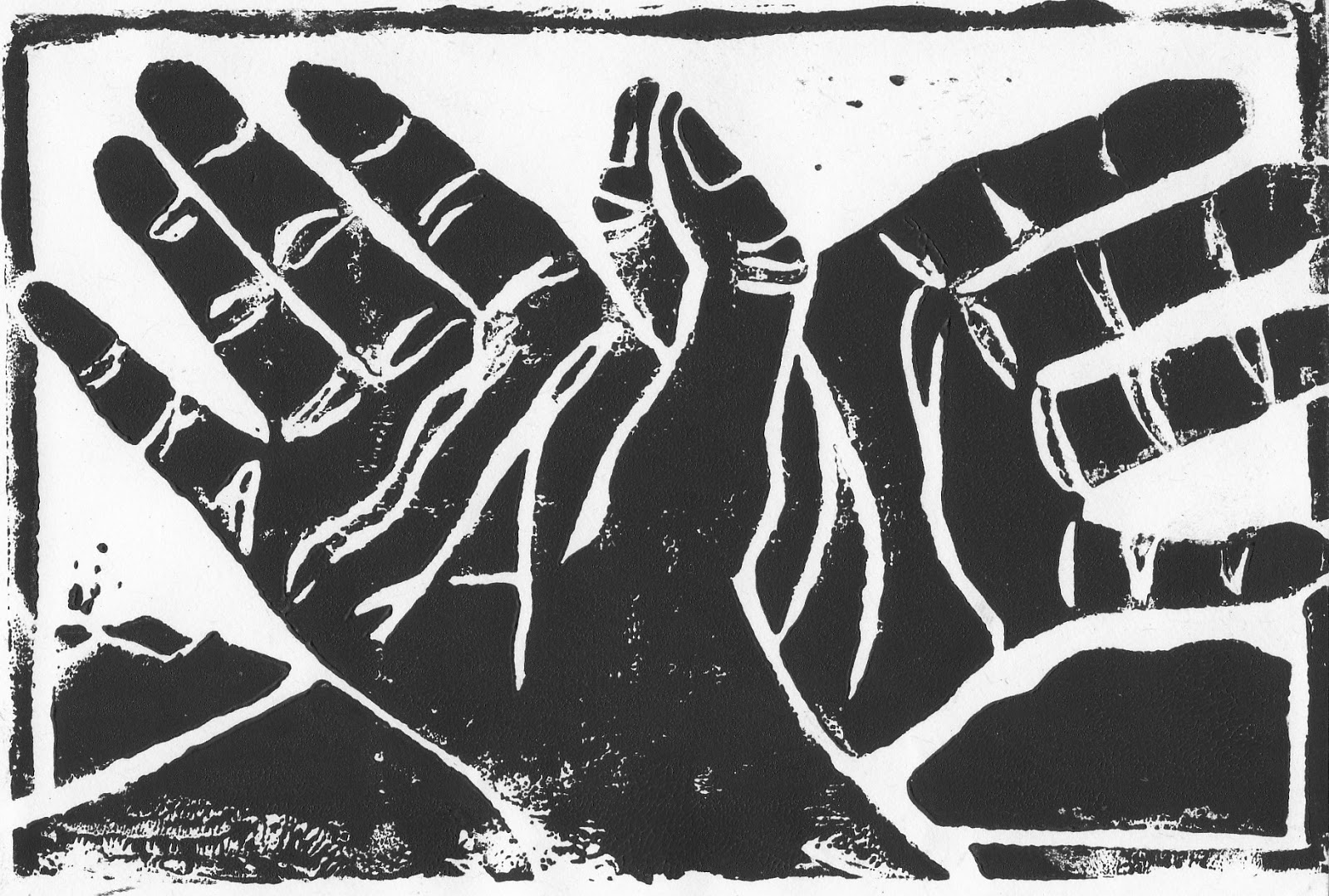
(I carved this listening to Obama's 2009 Inauguration.)

The Keystone XL Pipeline is still hanging too close to reality. President Obama has said he will veto it if the bill lands on his desk—and it appears all to likely that it will—and while I do love the idea of a man who ran on hope and change providing a decisive, dramatic, and heroic act in the eleventh hour, I both do and don’t understand politics enough to hold my breath.

Besides, either way, we—the fighters for and livers of a life away from unquestioned fossil fuel dependence—have already won.

To be sure, Keystone has become a symbol as crucial to the climate movement as a keystone is in an archway. But the extraction of tar sands and their rickety conveyance through the hearts of three sovereign nations is not merely a symbol, which is precisely why this pipeline has proved to be such an effective rallying point.

And I fiercely want that oil to stay in the ground, in the tar sands and out of any pipes through anyone’s backyard and water supply. I want the carbon unreleased to the atmosphere and TransCanada to go bankrupt. I cry whenever there is news about Keystone’s lumbering progress through the State Department, the House, the Senate, now the House again. I cry equally when I hear more and more about popular resistance and public displays of most personal outrage at the threat of corporate profit and carbon pollution over all else.

But, again, regardless of how Keystone leaves Obama’s desk shortly, we’ve already won. A passionate and educated movement has been built. Keystone, lightning rod of debate and symbolic reality, has provided the time and space for legions of citizens to become aware of the climate change, and the role that fossil fuel industries and cooperative governing bodies play in this new devastation of the world.

Knowledge, friends, is power. However Keystone goes—and if I were a praying woman I would do so now; instead I write—we have learned and so are unquantifiably powerful. We have learned what is at stake, what the machinations are that try to stamp out the rebellious, undeniable truth that drives each of us in our separate ways. This kindling of love for our lives and landscapes, for a planet and the fire of outrage at all that threatens what we hold dearest, this is a force to be reckoned with.

We must hold that love and that fire. Keystone is one battle. The public and common sense opposition to the pipeline has been beautiful, but our future is larger than a single pipeline. This may well be a turning point in the fight towards the cleaner and kinder future we hunger for, but the day after the Keystone veto will still be one of the hottest for its date on record, glaciers will still melt, and corporations will still have more influence in politics than you or I, regardless of how loud we yell or deeply we love the earth. The day after, we must continue as we have, pushing and acting and growing towards the solutions we are finding as we go.

This outcome-neutral forward momentum is when we will need the love we have found in fighting Keystone. This is why and how we have already won, because through veto or passage, feast or famine, we have found the truth in our hearts and land and our strength to speak and live into what we believe.

And no outside force can ever change that.

(The love of this place is part of what drives me forward and keeps me going when fighting climate change.)

Tuesday, January 20, 2015

Lessons from Terrorists

(Annie Leibovitz's photo of Pete Seeger 
and his banjo/hate crushing machine, from hilobrow.com)

Recently, friend and I were talking about the news. She had found herself absorbed by in-depth coverage of various horror spots of the world in the past few weeks. 

And, like most people who do so, her rapt attention slowly ceded to questions of if knowing all the available facts about violently-faith-based guerilla executions in France, about the deep harm racism causes in this country, about global temperature records being newly broken every year, if knowing all this news makes a difference.

I don’t know. Listening to the news doesn’t seem like much of a way to work for change. Listening, reading, being informed, even worrying in the night, seems so passive, and this news—this terrifying constant news—makes us want to rise up out of our seats, storm the castle and end the madness.

I don’t like the word “terrorist,” but as I can’t come up with some better term for these agents of sporadic, focused, devastating violence, it’s the word I’ll use.

We would do well to learn from these terrorists. Not in the sense of vengeance and violence, but in their manner of shaking up the world by of being small independent cells of individuals who are devoted to, but loosely affiliated with, a set of unifying ideals. Part of what makes the world seem scarier—other than overlistening to the news—is the idea that the terror and violence could come from anywhere. “Enemies” are no longer swathed in flags or behind iron curtains and cement walls.

And so, I believe that heroes are no longer to be found covered stoically in brass buttons or wearing capes or riding high white horses and protecting people like shepherds or inhuman angels. As the threats become more nuanced and personal, so too must the heroes, the solutions, the progress evolve into something growing and curling with shoots and branches and tendrils.

If terrorists can be home-grown lone-wolves, so can those of us who would have the world be better than it is. I have to trust that there are more people out there who want and believe in peace than who want and believe in violence. To think otherwise is fodder for those who would use fear as a weapon.

Guerilla acts of peace, carried out by passionate individuals loosely affiliated with ideals of human rights and world salvage, will not make headlines. But I believe that this is exactly what we must do, all of us, everywhere, every every minute.

And that is as pat and impractical piece of advice as possible. Being kind won’t stop a bullet or shut down a power plant, for example. But, we’re no longer in a world of one-to-one exchanges, of eye for an eye and vengeance Or if we are, I want to make a new one out of different materials. The opposing sides don’t march out to battle on a field. It is, entirely, regime and ethos change that we’re after. And, in that, being kind and doing all those small and daily acts that bring joy and love into the world, that affirm that all lives matter, that align the personal with the political…it does all add up to make a difference.

When it feels like your little actions—unplugging the dryer, smiling at strangers, telling people you love them, joining a CSA, lobbying for legislation, marching in the streets, whatever it is that you can do to put love into the world—are teensy drops in the bucket, think of this: you are part of something bigger than yourself. It helps, I find, to feel like I am part of a secret revolution, full of sleeper agents and unmet friends. Doing good is the password. Whenever I see solar panels, I either tear up or grin my face off, reminded that others are in this as well. We give each other strength and ballast with all our actions.

I believe—because I want to believe—that love is stronger than fear. It is slower, it does not make the headlines or trend on social media, but it is eternal. Our revolution doesn’t need to be secret, of course, but neither does it need to be televised to be effective.  Let’s have a revolution waged—daily—by peaceable guerillas who are loosely affiliated with and united by our faith in the world and each other.

That is the best news I can think of.